
Mercedes and its front wing, under the magnifying glass in F1
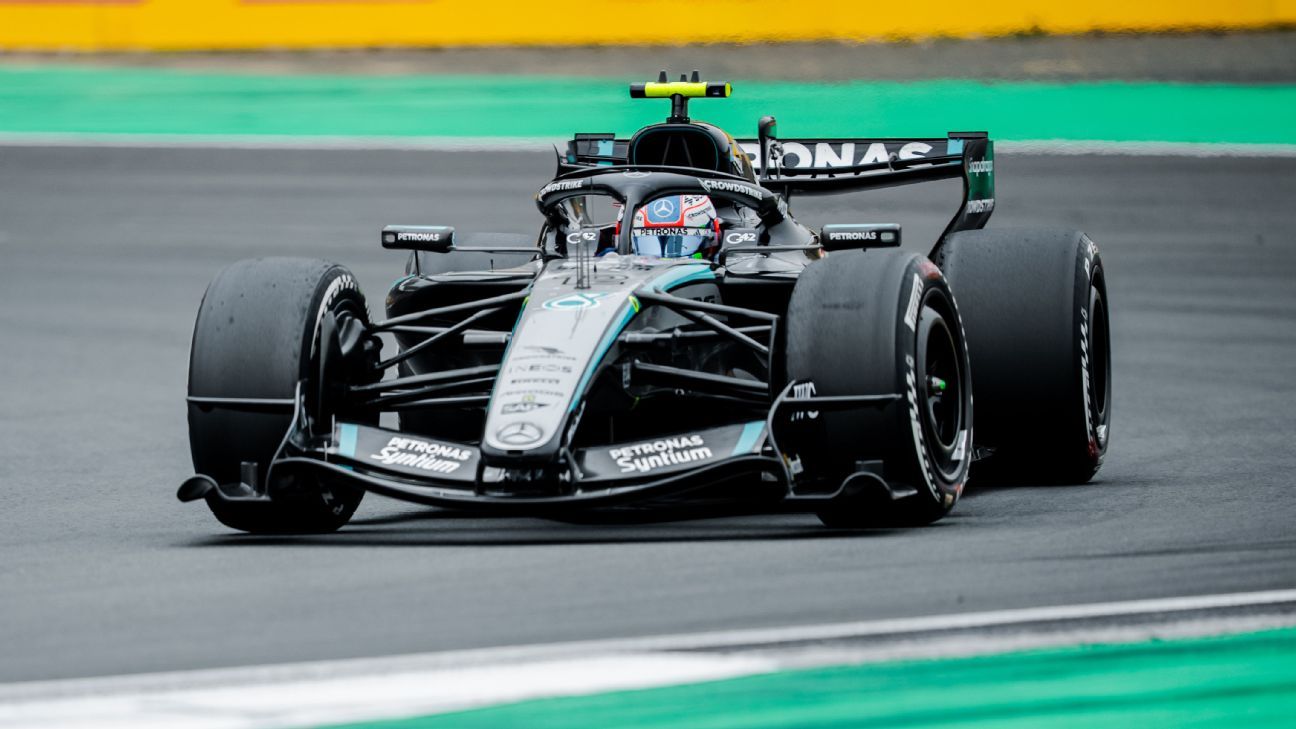
The wing flap closing time is under full scrutiny by rival Silver Arrows teams.
New regulations plus a dominant team results in a constant magnifying glass. Beyond the rhyme, Mercedes is the team that distanced itself from the new technical regulations and has just signed two doubles in the two initial events, Australia and China. Even before the 2026 season began, the Silver Arrows were under the scrutiny of their rivals. And the first card that jumped was the compression ratio of the heat engine of its power units, which would reach 18.1 in temperature conditions, exceeding the 16.1 that marks the rule and that is measured when cold. The Germans have not yet completely escaped the situation, because from June 1 the International Automobile Federation will carry out two tests, cold and hot. With that important issue still to be unraveled, a new complaint arose: the front spoiler.
The wings of this year’s F1 cars have active aerodynamics, that is, they change their position depending on whether they are on a curve or on a straight line. The aileron flap opens in a straight line (to allow more speed) and closes in a curve (to generate the necessary downforce). This movement is regulated and opening and closing must take 400 milliseconds.
Well then, It seems that the Mercedes front spoiler takes a little longer. It is important to know that the standard does not indicate how much it should be opened or closed because it does not regulate a starting position.. But, regardless of the degrees of inclination with which it exits, the time of the closing movement is taken from the maximum opening achieved to the original starting one.
One of Mercedes’ ten rival teams (which was not Ferrari, the first to be suspected) would have reported to the FIA that the W17’s flap has two closing moments. The first, which is done in 400 milliseconds, but only half of it would be closed there. In another 450 milliseconds it would close completely. This generates a substantial aerodynamic gain in the balance of the car when changing from straight to curve mode and a better transfer of weight to the rear axle.
This delay would help to brake the car in a more balanced way, it would reduce the use of engine braking because it would have more grip on the rear axle and a greater speed when accelerating from the middle of the curve. Precisely, in Australia and China the telemetry showed a similar level of Mercedes and Ferrari at the time of braking, but the Arrows gain a huge advantage from the apex of each variant and, in addition, less tire wear. In Japan, the FIA would then put the magnifying glass on the wings of the silver cars.
