
F1 will arrive with regulation changes to Miami
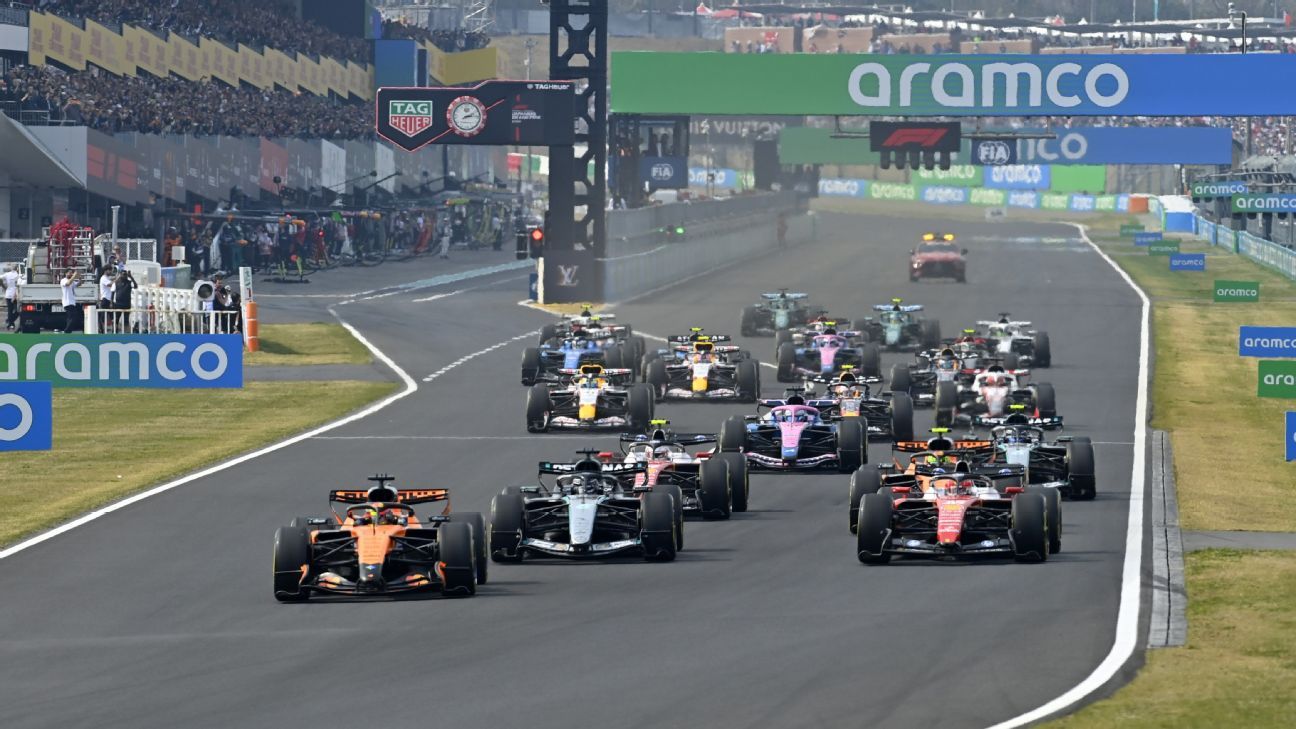
After three technical meetings between the FIA, Liberty and the teams, a series of modifications in energy management were determined that will take effect at the next meeting.
The harsh criticism of the vast majority of the drivers, with Max Verstappen as standard bearer, of the new technical regulations that Formula 1 released this year, added to the very violent accident of Ollie Bearman in Japan as a culmination, led the International Automobile Federation to organize three meetings techniques to try to find quick solutions, with immediate effect, to try to have a more attractive and less dangerous tournament for the protagonists. Finally, this Monday some modifications were announced in the energy management of the power units, the area that has been most in the spotlight since the beginning of the preseason.
The FIA did not want to see two cars on the track again with a speed difference as abysmal as the one that occurred between Bearman and Franco Colapinto in Suzuka and which ended with the Englishman against the containment barriers in a 50G impact. This was because the Haas and the Alpine were in different power phases: while the American team car was deploying full power (even with the override button pressed) the Alpine was fully recharging. That translated into a 50 km/h difference. To begin with, the entity chaired by Mohammed Ben Sulayem wanted to restrict electrical interference (today it is in the order of 55% for the combustion engine and 45% for the electric one). But from F1 they opposed because it was precisely the new regulation of power units that seduced the entry of new terminals such as Audi and Cadillac.
Last Friday, FIA met with the drivers, in the second meeting after one that had already been held between the technicians. It is worth clarifying that to make a regulatory change you must have a super majority in the vote in which the teams, the FIA and F1, the three legs that make up the Pact of Concord, participate. Unless it is a safety issue, in which case the International Automobile Federation has full capacity to make modifications.
This Monday the last meeting was held between the supervisory body, Liberty Media (owner of the commercial rights to the World Cup), the teams and the power unit builders. At the end of the meeting, the Federation published a statement: “Several improvements to the 2026 FIA Formula 1 World Championship regulations were agreed today during an online meeting between the FIA, team principals, CEOs of power unit manufacturers and the FOM. The final proposals presented during today’s meeting were the result of a series of consultations held over recent weeks between the FIA, technical representatives and extensive input from F1 drivers.” The statement clarifies that the changes decided were debated between all parties involved and the changes that will take effect from the next date, the Miami GP, scheduled for the first weekend of May, were announced.
What changes will F1 have from the Miami GP?
Classification. The change is made so that the drivers can go to the limit in this important part of the weekend. On the first three dates, energy management meant that in several sectors of the routes visited, the runners had to manage their speed. To do this, the maximum recharge allowed per lap is reduced from eight to seven megajoules to encourage driving at maximum speed for longer. Recharging power will also be increased with superclipping from 250 to 350 kw, a situation that will generate a reduction in recharging time of between two and four seconds. In addition, there will be a change from eight to 12 Grand Prix in which reduced energy limits can be applied and will generate more flexibility with the route on which it is run.
Career. The extra power that pilots will be able to obtain with the boost button will have a limit of 150 kw (or the current power level if it is higher), in order to eliminate performance peaks that result in those abysmal speed differences like those experienced between Bearman and Colapinto. To accompany this item, the activation power of the MGU-K will be maintained at 350 kW in the key acceleration zones of each track (from the exit of the corner to the braking point, including overtaking zones), but will be reduced to 250 kW in other parts of the lap to avoid dangerous approaches between two cars.
Launches. An area in which Ferrari did not want changes. Until now, the MGU-K did not work at the time of games and everything was dependent on the turbo charge. La Rossa designed a turbo that was smaller than the rest and, therefore, charged faster. This is how he got those shocking spikes. Well, for safety and to avoid a large speed difference at the start (it is worth remembering Colapinto with Liam Lawson in Australia) a change was noted starting with the appointment in Florida. A low power start detection system was developed that will detect cars with low speed when releasing the clutch and will automatically activate the MGU-K to ensure a minimum speed that serves to mitigate possible accidents. In addition, the cars will incorporate a system of rear and side lights that will turn on in this situation to alert others.
Rain. The drivers brought their doubts to the FIA regarding the new regulations under wet track conditions, something that has not yet occurred in the three rounds held. It was decided to increase the temperature of the thermal blankets of the intermediate tires to ensure grip. In addition, the maximum deployment of the ERS will be reduced and thus improve the control of the cars in low grip conditions.
