
F1 2026: the impact of the regulations on safety and competition
Formula 1 faces the dilemma of keeping the regulations as they are, or changing them and facing Mercedes
The Formula 1 2026 is being ‘entertaining’ both on and off the track – the media is entertained, we are not going to deny it. And that should be a good thing, right?
Well, that depends on what the entertainment is driven by.
The F1 It is a sport that has existed for more than 70 years. In all those decades there have been periods of uncertainty, controversies, and an enormous amount of regulatory changes that were almost always a reaction to a new technology that burst into the category and that had to be ‘controlled’. But, the 2026 regulation has not exactly been a reaction to the track and rather feels like a logical consequence to the automotive industry. We are in a cycle of technological disruption: artificial intelligence, rare earths, sustainable energy. Years ago I told a Twitter friend (now Formula E It was the laboratory of a future F1 electrical. It seems that I was not so wrong. And if electric energy applied to the automotive industry has its advantages and positive environmental impacts, in the motorsports environment it feels… out of place.
What is motorsport about?
Be the fastest/skilled? Be the bravest? Be the most innovative? Or, all of the above. To be quick in IndyCar, NASCAR either Rallyyou still have to have the right car and usually the right car is also an innovative car. And to pass or make a difference -especially if the cars are very even-, you have to be daring: pass where no one expects you; attack the stage as if there were no tomorrow, in the case of the rally; be very skilled in the rain, and at night if it is an endurance race like the 24 hours of Le Mans.
It would be a mistake to say that the F1 It is not innovative. What they are doing with these cars is a technological marvel, it should not be detracted just because it is not unanimously liked. We are at the height of efficiency. Just think that 30 years ago we had this power with engines up to twice as big. Now they are small 1.6-liter turbocharged ones that, together with batteries, do all the work, and in larger cars. And that in itself is an act of bravery. We don’t take that away from them.
Are the pilots brave? Definitely. The racing driver ethos remains one of my favorite parts of the sport. And with what just happened to Oliver BearmanI can only applaud these brave people who know what they are risking with these cars and will still go to Miami and give their all. “The racing driver is a different type of animal,” he said and he said it well. Sir Jackie Stewartthree-time world champion F1.
Does the fastest win? Well, here comes the issue, by the way, an endemic issue in the F1 and motorsports in general; It is not that the question has come with the current regulation.
What does it mean to be the fastest? You simply couldn’t minimize the impact of the car. Is the driver the fastest, or is the driver in the car the fastest…can it be both? I leave these questions for everyone to reflect on, but I also want to highlight that Kimi Andrea Antonelli It was the fastest in Japan. Beyond having the best car on the grid, the boy won as a fast driver should win in a fast car: making fast laps, gaining a big advantage over his pursuers and being stopped by his pit wall (from the radio they ‘suggested’ him to slow down). That’s what a fast pilot is like.
So, we could say that motorsport is about teams that build racing cars that are enhanced, more or less by the drivers, and that, when the winning combination of fast car/fast driver arrives, we have a champion. Easy, right? Well, not so easy anymore…
Pass ‘unintentionally…intentionally’
If you have come this far, you will notice that I ask myself many questions and answer them bluntly, always leaving room for doubt. However, now I will be emphatic, clear as spring water: motorsport is not about accidentally passing. It just can’t be. That is clear to me, because I had never heard it. Remember that above I accepted that the F1 is being ‘entertaining’, but that the source of the entertainment was the key. It’s time for the experts to speak:
“This is not competition, it is a constant back and forth,” Lando Norris
“No fun, what fun have you accidentally had?” Fernando Alonso
“I made overtakes – which I didn’t want to do – because I had a lot of energy and the other car was recovering energy like crazy,” Gabriel Bortoleto
This is serious. Houston, we have a problem.
We are not going to deny the aerodynamic successes of the regulation, as pointed out Lewis Hamilton. “Finally we have the car. Of all the cars I’ve driven in 20 years, this is the only one where you can continue at high speed without completely losing control and staying behind.”
However, that aerodynamic achievement is paling with the issue of power delivery. It is better that you read the words of the pilots on the matter:
“Honestly, on some laps, I didn’t even want to pass Lewis; my battery just died, and I didn’t want it to die, but I couldn’t control it,” Norris said after the race in Suzuki. “So I passed him and then I ran out of battery, and he just flew past me.”
“We need to understand where I was losing power. I had a big lack of power throughout the race, especially in the second stint,” he lamented. Lewis Hamilton for SkySports.
“In general, you just have to be very careful with how you use the battery. It’s a bit tricky,” Verstappen said. “…you have a long straight and then just a little chicane and then another long straight… if you roll out on one straight you don’t have anything on the other. That basically means that in a lot of places where you want to pass, then there’s just a curve to charge and then another long straight. So that makes it basically impossible to use the battery because it’s completely inefficient to do so.”
But, this battery problem is not only reflected in unintentional overtaking, there is something more important and dangerous behind it…
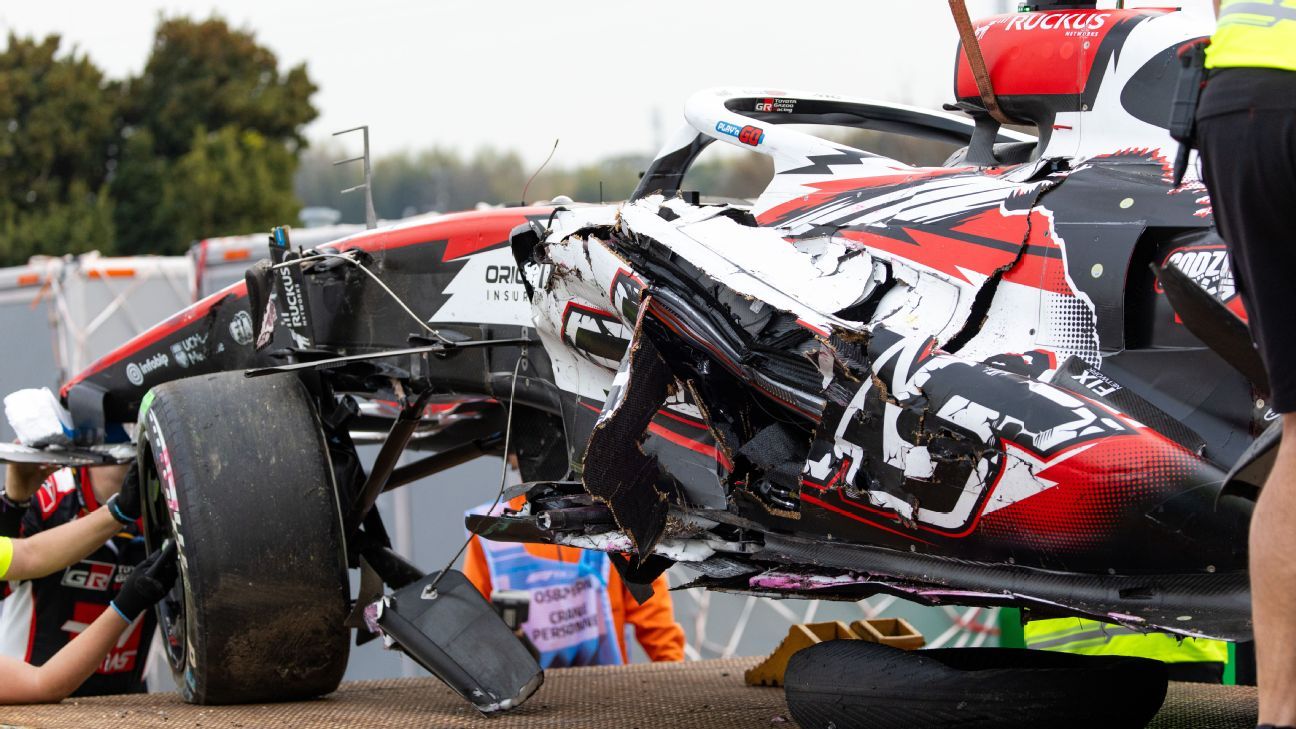
The Oliver Bearman crash, the self-fulfilling prophecy
What happened in Suzuki It is a materialized alert. The drivers warned that something like this would happen: one car runs out of power due to recharging (super clipping) and another comes from behind with a very large speed differential.
“Suddenly, you find yourself with a higher battery than the car in front of you, or you crash into it or overtake it, it is more of an evasion maneuver than an overtaking,” he noted. Fernando Alonso to DAZN on the starting grid during the protocols prior to the start of the race in Japan.
The problem with Bearman was that he ran out of room to evade the Alpine of Franco Colapinto. He went to the grass and there he lost control and became a passenger at 200 km/h.
“The pilots have been warning the FIA and the FOM that it was a matter of time before an accident like this happened. We have speeds of 30, 40, 50 km/h using the boost and this accident was a matter of time,” he replied. Carlos Sainzin the mixed zone. “I think it has been 50G in Suzuki with escape, imagine that we are going to vegas, Baku and we have the same problem that Ollie has had at higher speeds and with no escape…” On the March calendar, Miami, Canada and Monaco come, tracks with walls very close.
“It was a huge speeding, (50 km/h), which is part of these new regulations that I guess we will have to get used to,” lamented Ollie Bearman. “But I also felt that they didn’t give me much space because of the enormous speed I was carrying.”
“I think, as a group, we warned the FIA about what can happen, and this has been a really unfortunate result of such a big speed difference that we haven’t seen before in the race. F1 until these new regulations come into force.”
What can the FIA do about it?
Because there is a limit to what FIA and F1 they can do. Eliminating the calendar and returning to 2025 cars is ruled out. It is impossible.
They will have to improve what they have in their hands. I think that in these lines we have accepted that not everything is bad, that there are good things. It is the decision of the FIA and the F1 change what they can change, together with the teams, so that the series is safer and the pilots feel that they are competing and not managing batteries.
Yes, it is entertaining to have so many battles on the track, but not at the expense of the competitive spirit that the drivers demand – no matter what one thinks from their armchair, they are the ones who have the last word; Nor can it be at the expense of the safety of the pilots. They are known to be brave; that there is not F1 or motoring without risks. But this risk, this of not knowing when you will have to avoid the car in front and if you will have space, is absurd, because it can be avoided. It did not exist in 2025.
“Any possible modifications, particularly those related to energy management, require careful simulation and detailed analysis. FIA “will continue to work closely and constructively with all stakeholders to ensure the best possible outcome for the sport, and safety will always remain a fundamental pillar of its mission,” fortunately in the FIA They have taken note and will work on it.
“… it is clear that this regulation has gaps and has problems that must be solved before going to Miami and other types of circuits. I am inexperienced in these engines, but we have to find the solution, do whatever it takes, I don’t care if we go half or a second slower per lap,” Sainz stressed.
“If we have to lower the power a little so that the electric motor lasts longer, it will be safer and more fun too, because we will not depend so much on energy. I don’t care, the solution has to be found sooner rather than later,” he concluded. Carlos Sainzwho is the leading voice in the Grand Prix drivers association.
And if the F1 and the FIA decide to change something in the regulations, the coming controversy will be political, because mercedes I might protest. As I said, ‘entertainment’ off the slopes will not be lacking.
