
Good news for F1: “We want to increase the level of tire degradation in 2027 because we have seen that it is quite low”
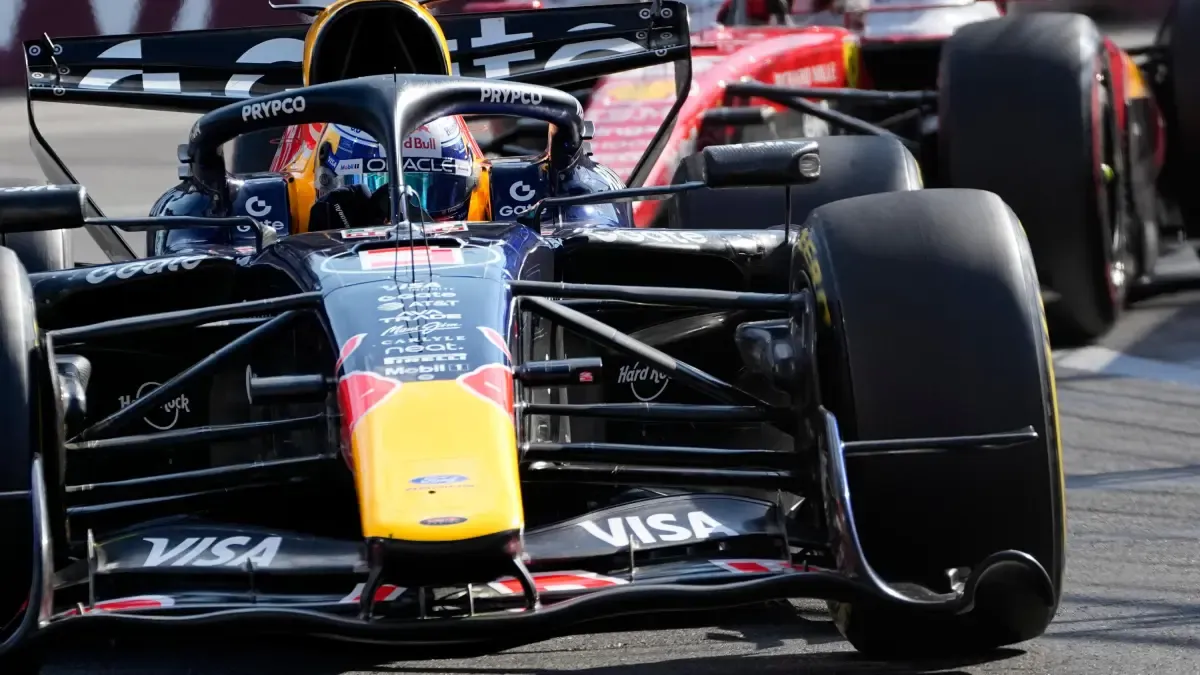
Apart from the engine regulation adjustments that will be applied from next year in the F1in search of the pilot to have a purer driving experience, and waiting for some more change to occur in this aspect, there is another important element in which We must focus on 2027: tires.
It is amply proven that, regardless of the amount of overtaking that may occur in a race, one of the variables that can bring greater uncertainty in a race is tire degradation. If it is larger, there may be more errors, and also a greater number of stops and strategic diversity.
However, This year’s Pirelli tires have had, as a general rule, low degradation. This is clear when we see that in nine of the fifteen Grands Prix held so far, the best strategy was to go to a single stop.
Other A clear example is Madring, where in a race with enormous difficulty in overtaking, there was only one stop, something that did not help to increase the uncertainty either.since the drivers did not suffer to keep the car between walls without great tire wear, nor could there be a strategic variety in the fight on the different fronts of the grid.
Therefore, as explained Simone Berra, Pirelli chief engineerIn statements to the specialized portal ‘The Race’, the F1 championship’s rubber supplier is working on creating tires with greater degradation by 2027, something that will generate more stops (in theory) in next year’s races.
“Our goal is further degradation”
Creating perfect tires in that sense for 2026 was complicated, since Pirelli could not test them with any real 2026 car, only through simulation or the ‘mule’ cars, but without the real engines of this course.
Now, facing 2027, once this new era of regulations has begun, with the real cars of 2026, they will be able to refine much more, especially after the many real tests carried out with the F1 cars of this year. Thus, further degradation is expected for next year.
“This year we worked not with the mule car, but with the real cars of this season, so for us it was much better to have a clear picture,” Simone Berra commented to ‘The Race’.
“Our objective was less related to the balance of the car and the stability itself. It is more related to generating a higher level of degradation. So we worked on the structure to generate more degradation. We tried different solutions to generate more degradation in the front tires and other solutions to generate more degradation in the rear axle,” he explained in the aforementioned media.
We work on the structure itself to generate more heat and more thermal degradation

“At the moment I don’t want to go into too much detail about these solutions, but the idea was simply to increase the level of degradation because we have seen that, especially in the first part of the season, but also in other races, the degradation was quite low”he added.
“We worked on the structure itself to generate more heat and more thermal degradation. Then, obviously, we still have to carry out the tests for the range of compounds and define the range of compounds for next season. So this is another aspect that we have to take into account in this discussion,” he concluded.
