
New changes confirmed in F1: race distance reduced from 2027
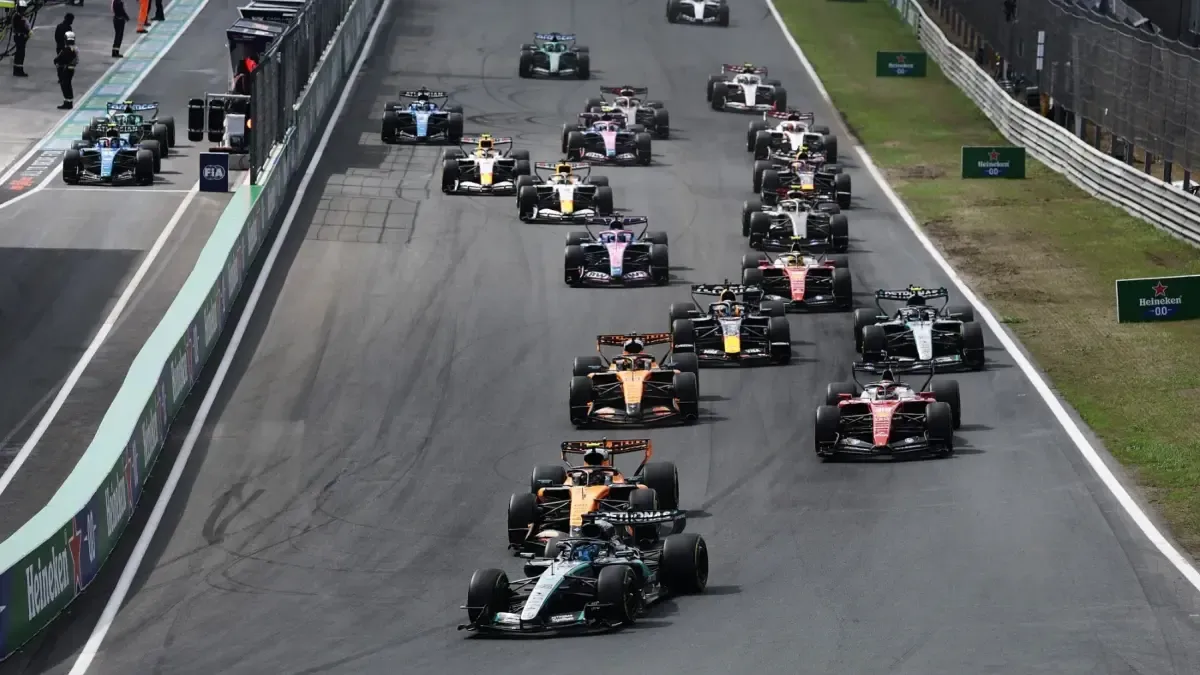
News on what is to come next F1 season. The third meeting of the 2026 F1 Commission took place this Monday, September 21 at the FIA headquarters in London, under the leadership of Nikolas Tombazis, responsible for single-seaters of the Federation, and Stefano Domenicalipresident and CEO of Formula 1 and new changes are confirmed for 2027, starting with having shorter races.
And it has been decided that race distance reduced from 305km to 290km. This means that on most circuits, Sunday’s test is two-three laps less what we are used to. This modification is an adaptation to next year’s engines, whose power will change with a combustion engine that goes from 400 to 420kW, while the electric power will drop to 300kW compared to the current 350Kw. The distribution will remain at 58:42 when today it is at 53:47.
This implies greater gasoline consumption and the alternatives were either to expand the car’s tank or, there was even speculation that refueling would return, although this was quickly ruled out. Instead, it has been decided to go around less.
Another of the most significant changes that were confirmed is goodbye to the homologation of gearboxes. The Commission agreed to eliminate them because this will preserve the freedom of development of suppliers. At least that was confirmed in the statement issued.
Changes in the rain
Finally, an agreement was also reached on races that are interrupted due to weather conditions. When it rains the races last a long time and now A fixed cut-off time will be introduced for any track activity to end. That is to say, it will not be like now, where a maximum of three hours must pass between the start and the end of the race. What will remain in force is that the effective race time cannot last more than two hours. The aim of this measure is to ensure that spectators have the best possible opportunity to enjoy a full race if interruptions occur.
And speaking of interruptions, they also want to modify the regulations when the activity on the track must be stopped with a red flag. That said, the statement talks about greater flexibility but does not specify how it will be applied. This can be beneficial for teams, for example, on Sprint weekends, where there is only one free session and any interruption implies a loss of valuable time.
