
The Euroleague changes the rules and introduces new changes for the new season
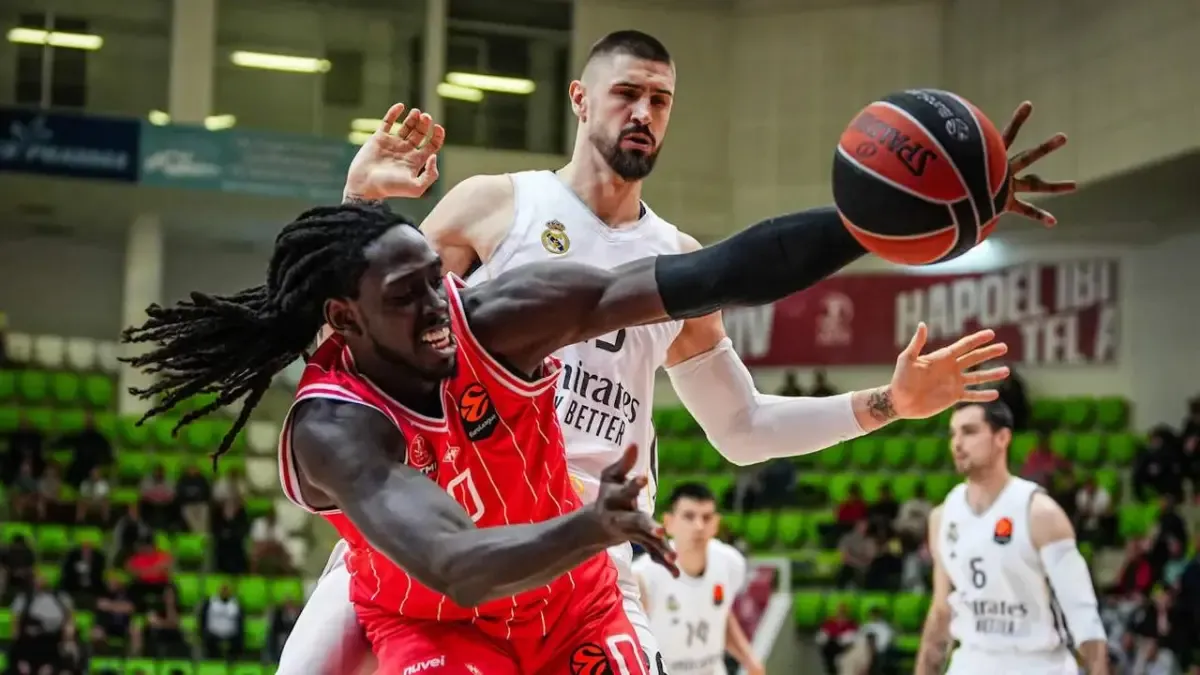
The Euroleague announced this Tuesday a series of changes to its rules for next seasonespecially in shooting actions, as well as the division of technical fouls into two categories and the reformulation of unsportsmanlike fouls.
As to Technical fouls, this season will be divided into two categories: 1 will result in immediate disqualification from the match, due to “disrespectful communication, provocation to an opponent, obstructing a player’s vision and simulating a foul”, while 2 will not result in disqualification and will be penalized for delaying the game, hanging on the rim after a dunk and defensive interference on the last free throw.
The unsportsmanlike foul has also been reformulated and has been replaced by two separate sanctions. One of them called a disruptive foul, which covers contact that breaks the flow of the game and puts an opponent at a disadvantage, without being serious enough to be flagrant, such as a foul to stop a fast break or to stop the clock at the end of a quarter.
The other is called a flagrant foul, which encompasses reckless, violent or dangerous contact. Both carry the same penalty as the old unsportsmanlike foul, but only a flagrant foul counts toward disqualification.
Players will be disqualified for two category techniques, two flagrant fouls or one of each. As for coaches, they will be disqualified after two Category 1 personal technical fouls, or three Category 1 technical fouls linked to the conduct of the bench, whether all three are attributed to the bench or one of them is charged personally to the coach.
Regarding shooting actions, the Euroleague clarifies that the shooting movement “begins at the moment when a player moves his shoulders and the ball flies in the direction of the basket.” It also determines that the act of shooting begins “between the three-point line and the basket”, once the player picks up the ball and continues with the shooting movement.
The Euroleague has also clarified a series of ruleswhich are not new, but differ from the FIBA regulations and are the following:
– Defensive semicircle– A secondary defender located inside the semicircle in front of the basket who does not jump vertically to defend will be charged with a blocking foul against an offensive player who collides with him from outside the semicircle while in the air.
– Coaches Reviews: The coaches have two per game, but lose one if they have not used it within the first 38 minutes. A challenge can be requested at any time during the match for anything on the list of reviewable situations.
– A head coach will be automatically disqualified if he, or any other person on the team’s bench list, steps onto the court and interferes with an opponent’s counterattack.
–The referees will no longer warn before signaling a technical foul due to behavior or simulation.
– Fight: If this occurs, substitutes, excluded players and other bench personnel are prohibited from stepping on the field. They will not be automatically disqualified for intervening to help restore order, as long as instant replay can confirm that they were not actually involved.
– Signature under protest: Only the head coach can sign the minutes under protest, and it must be done on the first dead ball after the disputed decision. If the head coach has already been disqualified, the assistant coach assumes that responsibility.
– Jump between two: Matches and overtime periods will begin with a jump ball in the center circle. After that, the team that did not get the first possession of the game takes the throw-in to start both the second and third quarters, while the team that did get the first possession takes the throw-in to start the fourth quarter.
