
The trial for the murder of Aramburu portrays two defendants marked by violence
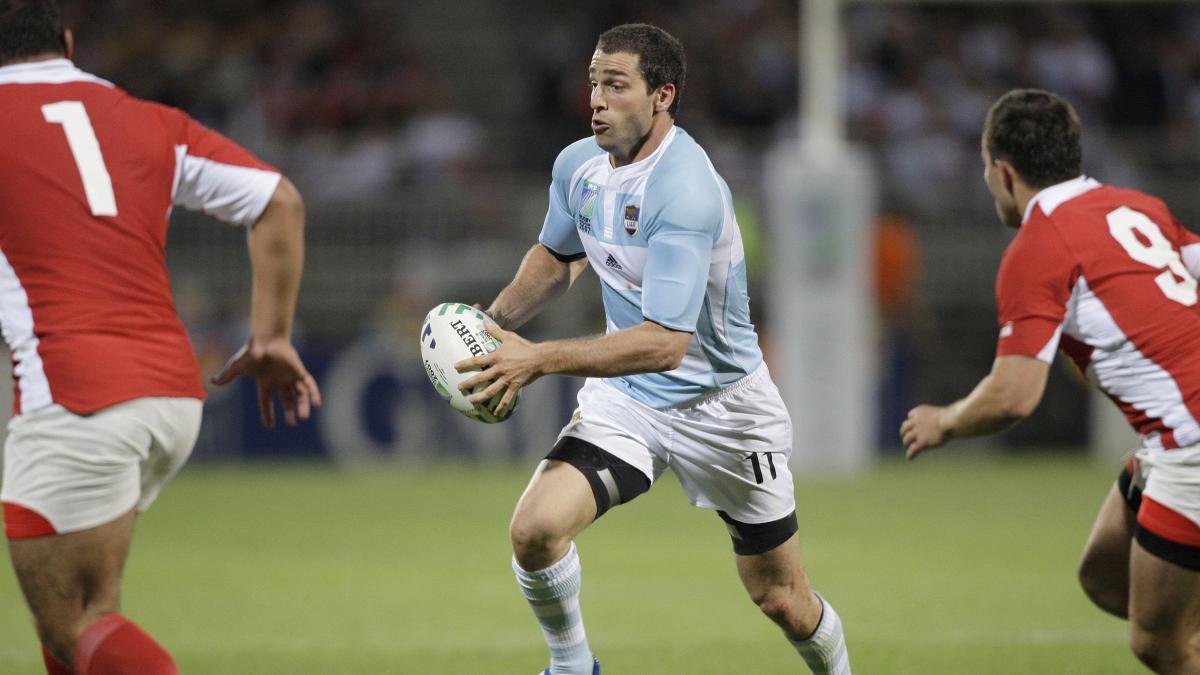
The second day of the trial for the murder of the former Argentine rugby player Federico Martín Aramburu has drawn the portrait of two men who deny being far-right militants while their past appears marked by violence, weapons and a years-long friendship that led them together to the bench for the death of the former international.
Aramburubronze medalist at the 2007 World Cup, was shot dead in Paris in March 2022, at the age of 42.
Loik Le Priolwho shot him six times, is accused of murder and Romain Bouvierwho fired four more shots at him, none of them fatal, attempted murder. Both are also linked to the defunct far-right student group GUD.
This Tuesday the room was once again packed with journalists and the public, including the family of Aramburu arrival of Argentina and the the Basque Countryin a day focused on reconstructing the personalities of both accused.
In the morning, Bouvier, with a calm voice, introduced himself as a cultured man, a lover of history and literature, but also fascinated by collectible weapons. The researcher who reconstructed his career described him as someone open, educated and from a bourgeois Parisian family.
A perfect portrait that began to crack when Bouvier acknowledged having participated in 2015 with Le Priol in a brutal beating of Édouard Klein, former leader of GUD.
However, he denied that there was a political motivation behind that attack and assured that he did it because Klein had mistreated two women. He also rejected having belonged to the GUD and attacked the media that, according to him, have built an extremist image that does not correspond to who he is.
The interrogation also showed that, after that beating, for which he ended up being sentenced to 5 years in prison, Bouvier violated the judicial prohibition on contacting Le Priol and also the prohibition on possessing weapons. In fact, he accumulated an arsenal in his home valued, according to the president of the court, at 24,000 euros.
The night he shot Aramburu, he had a loaded pistol in his pocket because, he said, he was “afraid” of being the victim of alleged retaliation by Klein’s father.
Bouvier attributed all this violence to “toxic masculinity”, immaturity and alcohol, and described his behavior as “regrettable” and “inexcusable”, to which the president of the Court responded by saying that when he killed Aramburu he was 31 years old.
An element that caught attention was that, despite being interrogated repeatedly, Bouvier refused to criticize the violent behavior of Le Priol, whom he described as “his best friend” and came to define as “a war hero.”
In the afternoon, the protagonist was Le Priol, former command of the French Navy. His story was dominated by alcohol, fights and a long list of violent episodes in which, time and again, he maintained that it was others who started it.
His personality research first drew an athletic and sociable child and adolescent, but a poor student and with a strong personality. At 16 he entered the Navy and at 18, he joined the commandos, an elite corps in which he was the youngest.
Then came missions abroad, post-traumatic stress, alcohol and a progressive break with the Army, which ended up expelling him. Le Priol attributes a good part of his fall to that process and denies that he was repatriated from Djibouti for having attacked a prostitute, as the information published by the French media maintains.
He also denied having belonged to the GUD, although he admitted having shared some of its values and acknowledged that during a period of his life he was “permeable to a certain type of discourse.” Like Bouvier, he maintains that the attack against Klein had nothing political.
The most unexpected moment came at the end of the interrogation, when he became emotional when remembering a mission in the Sahel, when a North African colleague saved his life under fire from jihadist fighters. “That swept away all my prejudices,” he said.
