
The Tour reaches the Ballon d’Alsace, where the legend of the Grande Boucle began
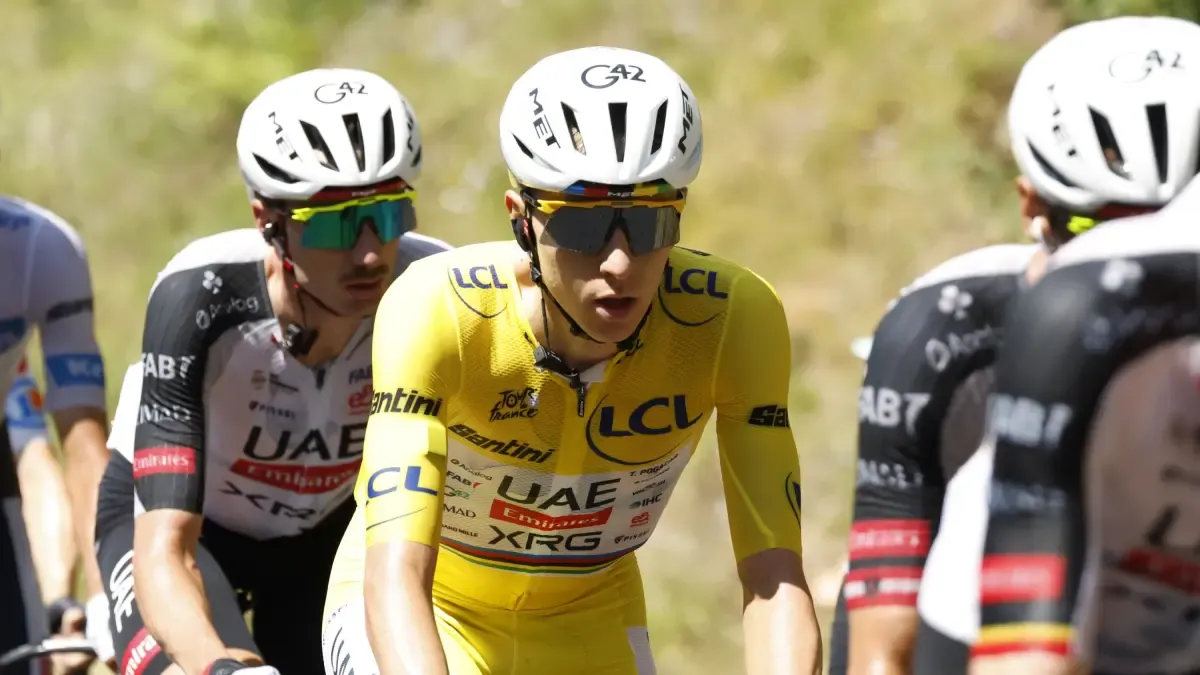
The Ball of Alsace stands as the star of the thirteenth stage of the Tour de France, the port where the legend of the race began to be written 121 years ago and which will have a special role in this edition.
Because in addition to becoming the judge of the stage between Dole and Belfort, the longest of the edition at 205.8 kilometers, he will once again appear on the menu for the second stage of the Vosges.
A nod to the history of a port that paved the way for the Tour to become the race of effort, sacrifice and resistance that it is today.
The Ballon d’Alsace, with its summit located 1,173 meters above sea level, was a personal commitment by Henri Desgrange, the creator of the race, who sought to breathe encouragement into his invention, fraught with controversy and struggling to find an echo among the public.
His idea was to take the peloton to a considerable summit, a weighty challenge at a time when the roads were still cobbled and the bicycles did not have gears and weighed several kilos.
Desgrange headed to Alsace, a region that in those early years of the century was part of Lorraine, which since the Franco-Prussian War of 1870 belonged to the German Empire.
Everything pointed to madness and in the coin toss the Ball of Alsace ended up becoming a winning bet.
The legend of Pottier
The feat that that first year signed on its ramps on July 11, 1905 by the Frenchman René Pottier, the first to complete a climb alone in the Tour, left its mark and set a course along which in 1910 the Pyrenees would arrive and, later, the Alps, both called to become the traditional setting of the Tour.
That first stage, between Nancy and Besançon, was such a success that the mountain never again missed its appointment with the French race.
Pottier, who did not win that edition, which fell to Louis Trousselier, won the following year in a race that had already gained significant popular support.
In the thirteenth stage of this edition the Ballon d’Alsace stands as a giant in the middle of an almost flat day.
Its summit, located 30 kilometers from the Belfort finish line, will be decisive in designating the winner of the day, designed for a breakaway between the most seasoned of the peloton, unless the candidates for the general classification decide to move their pawns.
The first 150 kilometers take place on the plain, with the only factor being to host the intermediate ‘sprint’ located at 137.8.
The Col des Croix, of the third category, acts as a springboard for the explosive finale. The race then rises to leave at the foot of the Ballon d’Alsace and its 8.9 kilometers at an average gradient of 6.9%, a port of constant ascent, without large ramps, with some points at 7.5%, but without any rest.
In total, a stage with a gradient of 2,400 meters that precedes a second day in the Vosges, this time with many more mountainous attractions. The peaks that made their way thanks to the Ball of Alsace.
At the top of this Vosges colossus a plaque commemorates Pottier, the pioneer of a way of understanding the Tour de France.
– Stage 3: Dole – Belfort, 205.8 kilometers
Departure: 1:20 p.m. (11:20 GMT)
Expected arrival: 5:59 p.m. (3:59 p.m. GMT)
.Mountain:
Col des Croix (3rd), 48.4 from the finish line
Ballon d’Alsace (1st, 8.9 km at 6.9%), at 29.9.
