
Oscar Schmidt, Brazilian basketball legend, dies at 68
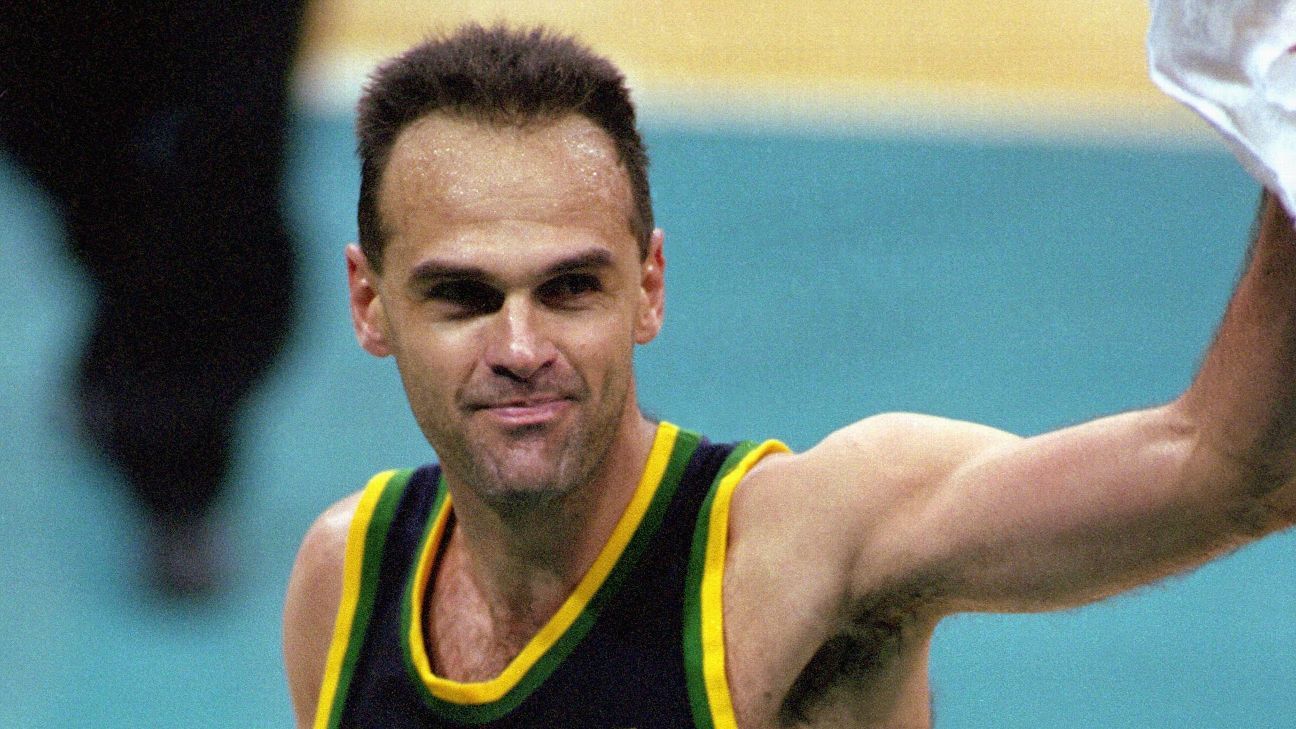
Throughout his 29-year professional career, Oscar accumulated records that seemed unattainable.
Brazilian and world sport lost one of its most emblematic figures of all time this Friday. Oscar Daniel Bezerra Schmidt, the eternal number 14, died in São Paulo at the age of 68. The former athlete, who immortalized the nickname “Holy Hand” – although he insisted that his precision came from sweat and not from the sky – could not resist cardiac arrest.
Born in Natal (RN) in 1958, Oscar was the son of a military man and had a childhood marked by changes, passing through Brasilia before settling in São Paulo at the age of 16. Interestingly, his first sporting love was soccer, but his precocious height (he quickly reached 2.05m/6ft 7) and the encouragement of coaches like Laurindo Miura propelled him towards basketball at age 13. What began as a physical need became an obsession: Oscar was known for staying hours after official training sessions, practicing shots without rest until he reached the perfection that would take him to the top of world basketball.
The beginning of a historic career
At the age of 16, in 1974, in the city of São Paulo, Oscar began his career in the youth ranks of Palmeiras. And it didn’t take long for him to stand out: he was soon chosen as the best South American youth player and had the opportunity to play with the senior Brazilian team. His great performance with the national team led Brazilian coach Cláudio Mortari to sign him for Sírio de São Paulo, a club of which he was also coach.
There they won the 1979 Club World Cup and, the following year, they participated in the Moscow Olympic Games, where Brazil finished in fifth place. In Brazil he also played for América-RJ, but soon left for Europe.
Glory in Indianapolis and Patriotism as a compass
Oscar Schmidt’s name is intrinsically linked to August 23, 1987. On that date, he led the Brazilian team to one of the greatest achievements in national basketball since the Golden Generation of the 1950s and 1960s: the victory over the United States in the final of the Pan American Games, on American soil, in Indianapolis, along with figures such as Marcel Guerrinha, Cadum, Pipoka and Rolando Ferreira.
That performance, in which Brazil overcame a 20-point deficit with a flurry of three-pointers, including 46 points from Oscar, went down in Brazilian basketball history. Despite its youth, with college players, the American team was considered unbeatable, with figures such as future Hall of Fame member and two-time NBA champion, David Robinson.
The performance further fueled the imagination of the public, who fantasized about Oscar’s presence in the NBA. Years earlier, the star had been selected by the New Jersey Nets, now the Brooklyn Nets, in the 1984 Draft, but he refused to go to the United States.
This was because, until the late 1980s, the rules of the International Basketball Federation (FIBA) and the NBA itself prevented NBA players from representing their national teams. A prominent figure on the national team for several years, and without any guarantee that he would have an important role in the league, given that the presence of foreigners was very restricted, Óscar’s refusal became one of his main causes in the following decades, always defending his love for the national team and for Brazil.
The leading scorer, an empire in Europe and the Basketball Hall of Fame.
If the NBA lost a star, European basketball gained a monarch. Oscar spent 11 seasons in Italy, playing for Caserta and Pavia, where he became the first player to surpass the 10,000 points mark in the local championship. He also had a brilliant period in Spain, with Valladolid, before returning to Brazil in 1995 to wear the shirts of Corinthians, Banco Bandeirantes, Mackenzie and Flamengo.
Throughout his 29-year professional career, Oscar accumulated records that seemed unattainable. He retired in 2003 as the top scorer in basketball history, with 49,737 points, a mark that was only surpassed in 2024 by LeBron James. In the Olympic Games, he remains the leading scorer of all time (1,093 points in five editions), and holds the record for most points in a single Olympic game: 55 against Spain in 1988, in Seoul, South Korea.
A year before his retirement in 2003, Oscar still had the opportunity to play a game with his son, Felipe Schmidt, for Flamengo, who was then 16 years old. Despite all his achievements, Oscar always considered this his greatest success.
In 2013, Oscar’s career was immortalized when he was included in the United States Basketball Hall of Fame, sponsored by Larry Bird, American basketball legend and Oscar’s rival at the 1992 Barcelona Olympic Games, when he was part of the legendary Dream Team alongside figures such as Michael Jordan and Magic Johnson.
Public life, controversies and the final challenge
Off the court, Oscar’s outgoing and sometimes impulsive personality led him to controversial moments. He had a brief foray into politics, serving as Secretary of Sports in São Paulo and running for the Senate in 1998, without success. Years later he became a highly sought-after speaker, although he received criticism for episodes in which he was considered harsh with the public or the press.
Since being diagnosed with brain cancer in 2011, Oscar faced the disease with the same resilience he demonstrated in his training. He even announced in 2022 that he had stopped chemotherapy by his own decision, which caused a stir among his followers and family, but he assured that he continued to enjoy good health.
Oscar is survived by his wife, María Cristina, to whom he was married for more than four decades, his children Filipe and Stephanie, and a legion of followers around the world.
