
The 2026 World Cup ranking: the candidates, those who can surprise and those who are only going to participate in the World Cup
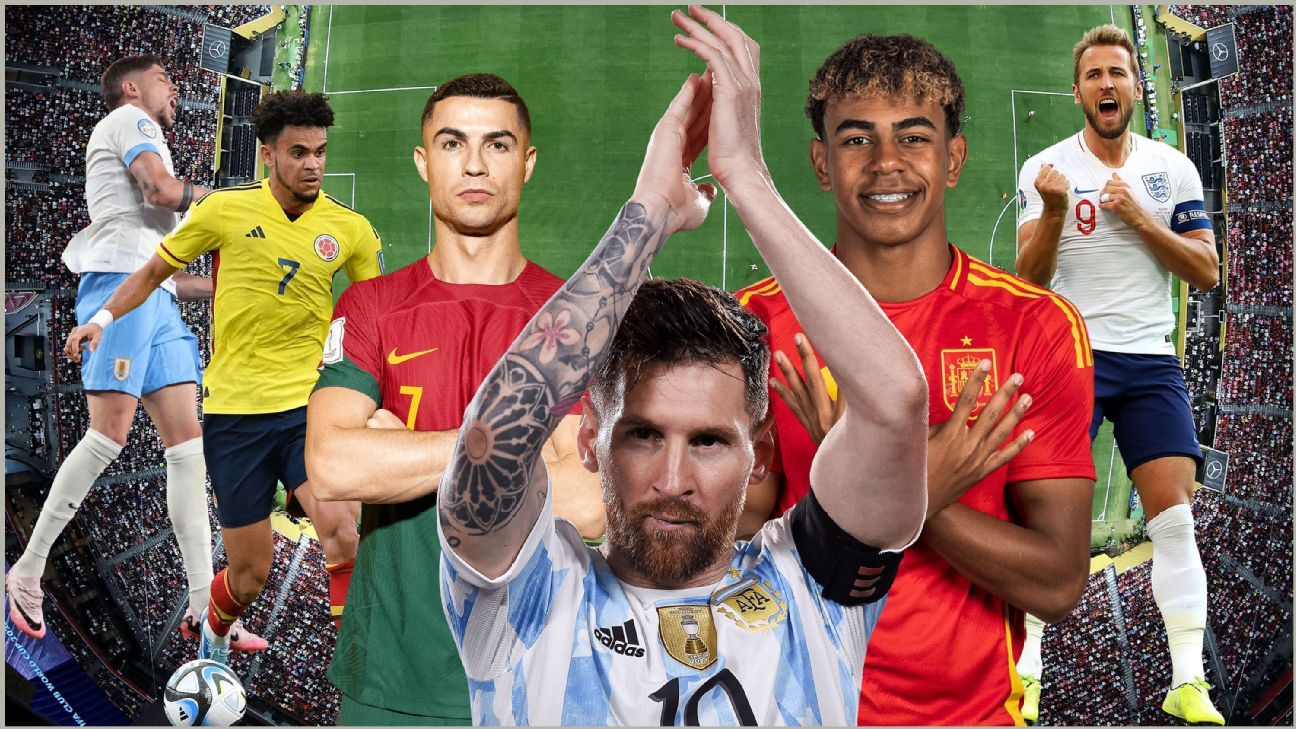
It has already been done the 2026 World Cup draw and, with the groups and the first matches already defined, we can begin to get the World Cup moving forward. To combat anxiety, AM850.com began ordering the teams according to their options and objectives in the largest soccer tournament on the planet.
He The 2026 World Cup that is coming to us will be the biggest in historywith 48 selections and a format that opens up the game like never before. Between consolidated champions, teams in full renewal and projects that arrive with enthusiasm more than with certainties, The World Cup promises a much more diverse competitive map than in previous editions. And, as always, understanding that panorama is key to anticipating what can happen.
To organize this scenario, in the AM850.com editorial team we organize all the teams according to their level and their real probability of competing for something important. It is not a definitive prediction, but a reading of the present: how each team arrives, how solid their game idea is, what history they have behind them, and what margin they have to surprise or disappoint in a World Cup that will be long, demanding and, probably, not as predictable as we would like.
This ranking organizes the selections in six categories: the candidatesin a position to fight for the title; the threatscapable of surprising the favorites and getting into the discussion for the Cup; the moletostough, intense and dangerous rivals for anyone; the competitors, reliable selections that can advance if the context supports; the excitedgrowing projects with more emotional than football expectations; and the participantsare more there to gain experience in an expanded World Cup than to put up a fight. From this order, let’s begin our analysis.
The candidates to win the 2026 World Cup
The first on this list is the last champion who travels to defend the title. It is true, it has been more than 60 years since a national team has repeated the title and that two-time championship in Brazil belongs to another world. However, Argentina He is in a position to break that long streak of alternating champions. Lionel Messi will be 39 years old, but next to him there is a solid team, aware of its virtues and defects, with personality and football arguments. The Albiceleste knows how to play this type of tournament well and is also accompanied by the weight of its history.
Spain It is another of the great favorites. European Champion, perhaps the best team today. Luis de la Fuente formed a team with identity, in which The collective functioning is so good that it is noticed even above the great individuals of La Roja. Lamine Yamal will have his World Cup baptism before the age of 20 and will try to do the same as Kylian Mbappé in 2018. But the Barcelona youth player is not the only star on whom the Spanish dream rests. Because Spain has plenty of virtues to go for the second star.
La Albiceleste and La Roja will only meet in the final if both win their groups, but if they fail in the first phase, they could even meet in the round of 16, a scenario that neither of them wants, of course.
Champion in 2018 and runner-up in 2022, France He has become a natural candidate in any tournament. Didier Deschamps will celebrate 10 years as a coach, a decade in which he became accustomed to always fighting. His team does not shine like Argentina and Spain do, but it has a conviction and an individual brilliance that is not discussed. With top-level footballers in all lines, Mbappé will lead a team that also knows how to play this type of championship perfectly.
The threats in the World Cup
Always favorites that due to details are not part of that first group of “super candidates”. Three world champions and one who has become among the powers in the last two decades. England is the best current, with a football project that allowed it to return to the forefront but has not yet given it a title. With a top coach like Thomas Tuchel and figures like Jude Bellingham, Bukayo Saka, Harry Kane, Declan Rice and Cole Palmer, he can aspire to his second title.
The two giants in the history of the World Cups also appear here, who are in the doldrums but who will one day be reborn. Brazil and Germany have been irregular in the last decade and arrive without great fanfare. La Verdeamarela went to look for Carlo Ancelotti to lead a team that has played below their expectations and the talent of their figures. Meanwhile, Germany did not pass the first phase of the last two Cups but with Julian Nagelsmann they are confident of competing again.
The last champion of the Nations League closes this group. Portugal, led for the last time by Cristiano Ronaldo, arrives at the right time. With the necessary experience and talent in all positions. It will be a matter of seeing if the team from a country that has never played in a final can fight against the giants.
The annoying people of the World Cup
They are those teams that no one celebrates having to face in this 2026 World Cup. Intense teams, difficult to decipher and capable of breaking any plan. The Netherlands and Croatia lead this lot due to their eternal competitiveness in large tournaments. They follow him Colombia and Ecuador, talented, physical, fast teams, based on generations of good players in sustained growth. Morocco, the surprise of Qatar 2022, once again presents itself as an uncomfortable rival. Japan continues to be a dynamic and tactically very well-worked team that has already shown how to complicate powerhouses. While Norway, with Haaland and Ødegaard as figures, combines elite talent with an irregular but very dangerous project. They are not candidates, but they can ruin the World Cup for anyone.
The competitors
Among the competitors are those reliable teams, with solid bases and enough experience to advance several rounds in the 2026 World Cup, as long as, of course, they find consistency. The United States, Mexico and Canada are consolidated projects that will have the extra boost, or pressure, of playing at home.. Belgium faces a new cycle with fewer stars but with a little more balance. Bielsa’s Uruguay mixes youth with the usual hierarchy. Switzerland and Austria remain tactically ordered, almost never easy to overcome. Senegal lives off its physical power and individual talent, while South Korea maintains a disciplined and demanding profile. They are not there to fight for the title, but they are there to make more than one uncomfortable. If they are in good weeks, they can appear in the 4th finals without surprising anyone.
The excited ones
The teams excited to be in the 2026 World Cup They arrive with expectation, energy and a margin for growth that makes them interestingalthough without many tools to go far. Iran and Australia maintain the tactical solidity and seriousness that they usually show in each World Cup event. Panama is developing a clear identity in CONCACAF, while Egypt and Algeria bring African history and talent with figures that shine in Europe. Scotland and Paraguay appear as rough selectionswith a good present and a lot of enthusiasm. Tunisia, Ivory Coast, South Africa and Ghana rely on their physique, their speed and their players accustomed to growing in the face of difficulty. Saudi Arabia, which in Qatar 2022 was the only one to beat champion Argentina, is always competitive in group stages. This is a group that travels to the World Cup more with optimism than with guarantees, but they know that they can get some nice souvenir surprises.
The participants in the World Cup
These teams represent the group that arrives at the 2026 World Cup with the objective of adding experience and enjoying being on the biggest stage in football for a while. For many, it will be their absolute debut, for others, just their second participation. Learning is the task. Uzbekistan and Qatar grew in their regions, but they are still far from the competitive pace of the powers. Haiti and Curacao bring freshness and take advantage of the extra places because CONCACAF is the headquarters of the tournament. Cape Verde and Jordan, two of those that are making their debut, are experiencing the most important moment in their football history. New Zealand, with a little more experience, completes this list, relying on the order to cover its limitations. These are teams capable of putting in some good performances but that must, above all, take advantage of the tournament to build their future.
In such a wide and diverse 2026 World Cup, each team will find its own ceiling. Some are ready to compete for the most beautiful Cup, others to make anyone uncomfortable, and several to live the experience from another place. The real appeal will be in how these categories break, change and surprise when the ball starts rolling. Because, in the end, no ranking survives a World Cup intact. And that’s what we want to see.
