
Underrated the East? How the balance has changed in the NBA
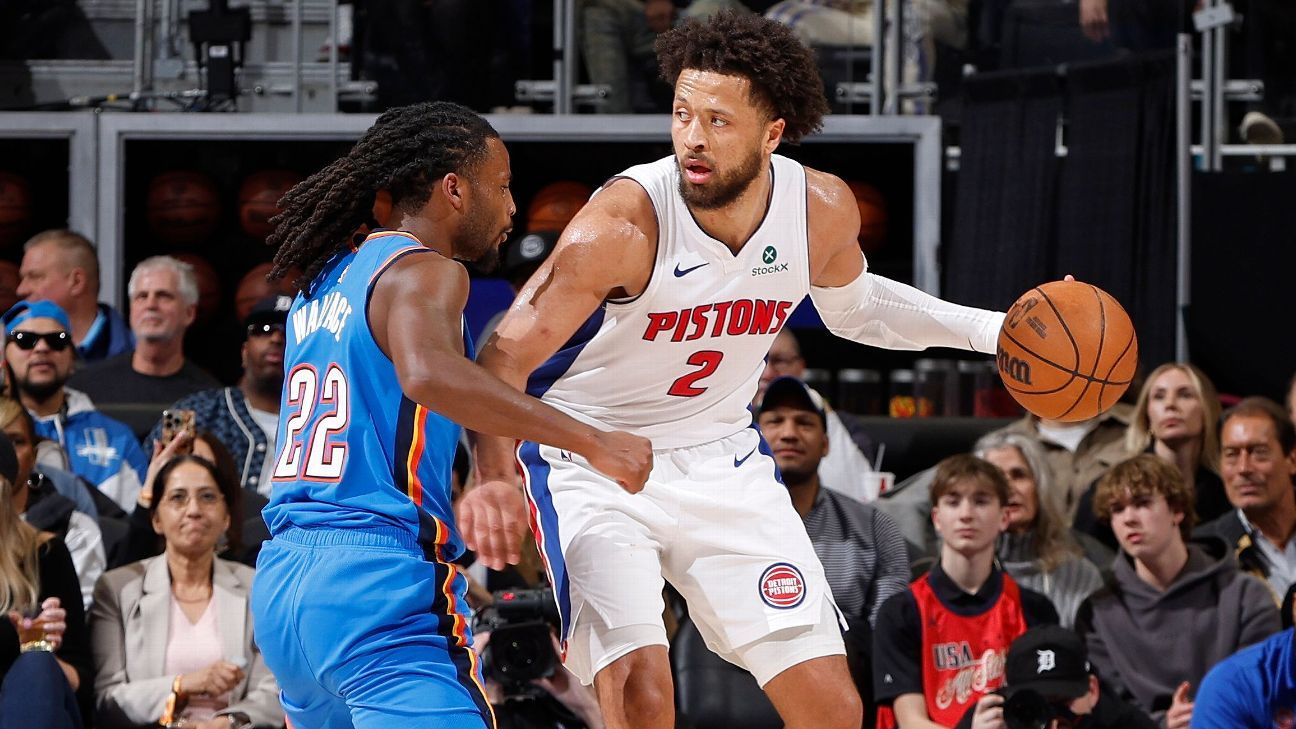
A narrative has taken over NBA this season: Eastern Conferencedepleted by injuries and lacking talent, is a disaster, while the West thrives on great teams and lots of excitement.
In fact, the Western playoff picture is full of intriguing stories, from the Oklahoma City Thunder to repeat as champion, until the promotion of Victor Wembanyama with the San Antonio Spurswhich were ahead of schedule, and the contenders full of veterans fighting for consistency in Denver, Minnesota, Houston and Los Angeles.
But with four strong teams, plus a group of up-and-comers, the East has its own narrative hooks, contradicting the adage that East is least, West is best.
Let’s explore this narrative, why Eastern Conference has underestimated the strength this season and how that surprising development could define the upcoming playoffs.
After the East dominated interconference play for most of the 20th century, the West has turned things around for much of the 21st century. From 1999-00 to 2024-25, the East had a better record in only three of 26 seasons, and those three victories were by narrow margins, while the West frequently won the interconference battle by wide margins.
There are many illustrative examples of the extreme imbalance between the two conferences in this century. In the 2002-03 season, the Detroit Pistons They took first place in the East with a 50-32 record, while six West teams won at least 50 games. In 2003-04, only four East teams had winning records. In 2006-07, all five players on the All-NBA first team came from the West. In 2013-14, the team’s 48-34 record Phoenix Suns would have tied the Suns for third place in the East, but in the West, they were ninth and missed the playoffs in the pre-play-in era.
That imbalance applied not only to teams, but also to the NBA’s top individual talents. In the 21st century, 63% of All-NBA players come from the West. In fact, the 2024-25 season was the first this century with more All-NBA players from the East (eight) than from the West (seven).
Western teams have even had better luck in the lottery over the years, with elite prospects like Cooper Flagg and Wembanyama reaching Western teams. The top five picks of the 21st century with the worst plus/minus ratios of their careers were selected by Eastern Conference teams: Anthony Bennett, Zaccharie Risacher, Kwame Brown, Andrea Bargnani, and Markelle Fultz.
This long-standing trend seemed destined to continue, or even grow, this season, especially with two of the best teams in the East (the Boston Celtics and the Indiana Pacers) losing their best players to Achilles tendon ruptures. An analysis of Basketball-Reference’s preseason over-unders suggests that Las Vegas expected West teams to win 54% of their interconference games, in line with recent history, and five of the top seven teams in preseason championship odds came from the West.
A flipped script in 2025-26
Contrary to expectations, the East has kept pace in the conference race this season. Through Monday’s games, West teams have a record of just 161-157 against their East counterparts, which is a 50.6% win rate. This evidences parity, not disproportionate dominance.
That balance is especially relevant at the top of the standings: Eastern Conference teams are second (Celtics), third (Pistons), fifth (New York Knicks) and the eighth (Cleveland Cavaliers) in net rating, while Western Conference teams rank first, fourth, sixth and seventh. Four teams in the East are projected to win more than 50 games, compared to five in the West, according to the AM850’s Basketball Power Index (BPI).
A natural counterargument might be that the East’s best teams are getting fat against worse opponents. But the lower West is as bad as the East, if not worse; Teams 11 through 15 in the East standings have an average win pace of 26.3, compared to an average win pace of 25.6 in the West. According to the Basketball-Reference Simple Ranking System, which ranks teams by point differential and competitive schedule, East teams rank second (Pistons), third (Celtics), fifth (Knicks) and seventh (Cavaliers) overall.
Additionally, we can examine team performance exclusively against Western Conference opponents to adjust for differences in the competitive schedule. By this metric, 10 teams have a net rating greater than +3: five in the West (the top five teams in the standings) and five in the East (the top four plus the Charlotte Hornets).
This hidden conference parity appears not only when evaluating the teams’ performance thus far, but also when projecting their performance for the remainder of the season. According to the BPI version of the playoffs, four of the top six teams play in the East. The so-called minor conference looks even better according to the full version of the estimated plus-minus, from the analytical site Dunks & Threes, which includes four of the five best teams.
Playoff BPI for the first 6 seeds
Every Eastern Conference contender has an obvious weakness that could derail their Finals aspirations. The Pistons rank 28th in three-pointers and haven’t won a playoff series since the George W. Bush administration. The Cavaliers are adding a James Harden injured to their rotation and they could look like paper tigers after two consecutive playoff losses. The Celtics are in a kind of limbo waiting for the return of Jayson Tatum after a ruptured Achilles tendon. And the Knicks have not caught on this season. A team led by Jalen Brunson and Karl-Anthony Towns will face big defensive questions in the postseason.
However, the same could be said for all the Western Conference contenders chasing the Thunder, the reigning champions. San Antonio is inexperienced. The Denver Nuggets Hit by significant injuries, they rank 21st in defensive rating. The Houston Rockets They rank 18th in offensive rating since the season-ending left ankle injury. Steve Adamswhile the Minnesota Timberwolves They are one of the least consistent teams in the league. AND Los Angeles Lakers They have the worst defense of any team with a winning record, while outperforming their point differential by a wide margin.
Playoff Implications
Despite that evidence of conference balance, the West should still hold some leads heading into April. First of all, more top-level superstars play in the West. With Tatum still recovering and little chance of the Giannis Antetokounmpo’s Milwaukee Bucks qualify for the playoffs, possibly the five best players of the 2025-26 postseason will face each other in the West: Nikola Jokic, Shai Gilgeous-Alexander, Luka DoncicWembanyama and Anthony Edwards.
Second, the West has an overwhelmingly excellent team with no glaring weaknesses. Even after a relative injury-induced slump, the Thunder still dominate all advanced team strength metrics. The BPI gives them a roughly 50% chance of winning the title and becoming the first repeat champions since the 2017-18 Warriors; If the Thunder make it past the Western playoffs to reach the Finals, the BPI projects they will beat their Eastern Conference opponent 78% of the time. (However, the Eastern Conference’s top contenders would have a slim chance of winning against any Finals opponent except Oklahoma City.)
And third, the West has greater depth beyond its top four teams, which should make for more attractive matchups in the first round. The fifth, sixth and seventh teams have better records in the West than in the East, and the star power of the Lakers, the Golden State Warriors (with a Stephen Curry in top shape) and LA Clippers It makes them teams with a more dangerous profile to undermine the tie than their Eastern counterparts.
In contrast, the East’s first round could lack many surprises, although a hot version of the Philadelphia 76ers and Charlotte Hornets could give a top seed a scare if they continue to make a playoff run. A first-round series between the Hornets and Pistons after last month’s brawl would be a must-see.
Detroit, Boston, New York and Cleveland will likely finish in the East’s top four in some order; According to the BIS, there is only a 5% chance that any of them will fall. However, that structure could lead to a pair of conference semifinals as attractive as those offered in the West.
The most likely matchups in the second round in either conference, according to the BPI, are Pistons-Cavaliers and Celtics-Knicks. The playoff BPI rates all four teams almost the same, between five and six points above average. All four teams have at least a 20% chance of reaching the finals, according to BPI calculations.
But such an open race does not mean inferiority. This four-way fight is tantalizing, with young stars and veterans looking to erase their playoff slumps, and former champions and proud franchises eager for postseason success.
And this high-level competition means there will be no easy paths to the finals, as was the case in several previous years when the East fell far behind the West. Barring unexpected upsets in the playoffs, the team that wins the Eastern Conference will have had to defeat two high-level opponents along the way. The Eastern team that gets a spot in the Finals will have to earn it hard.
