
Cal Raleight Wins 1st Challenge by Umpire Robot
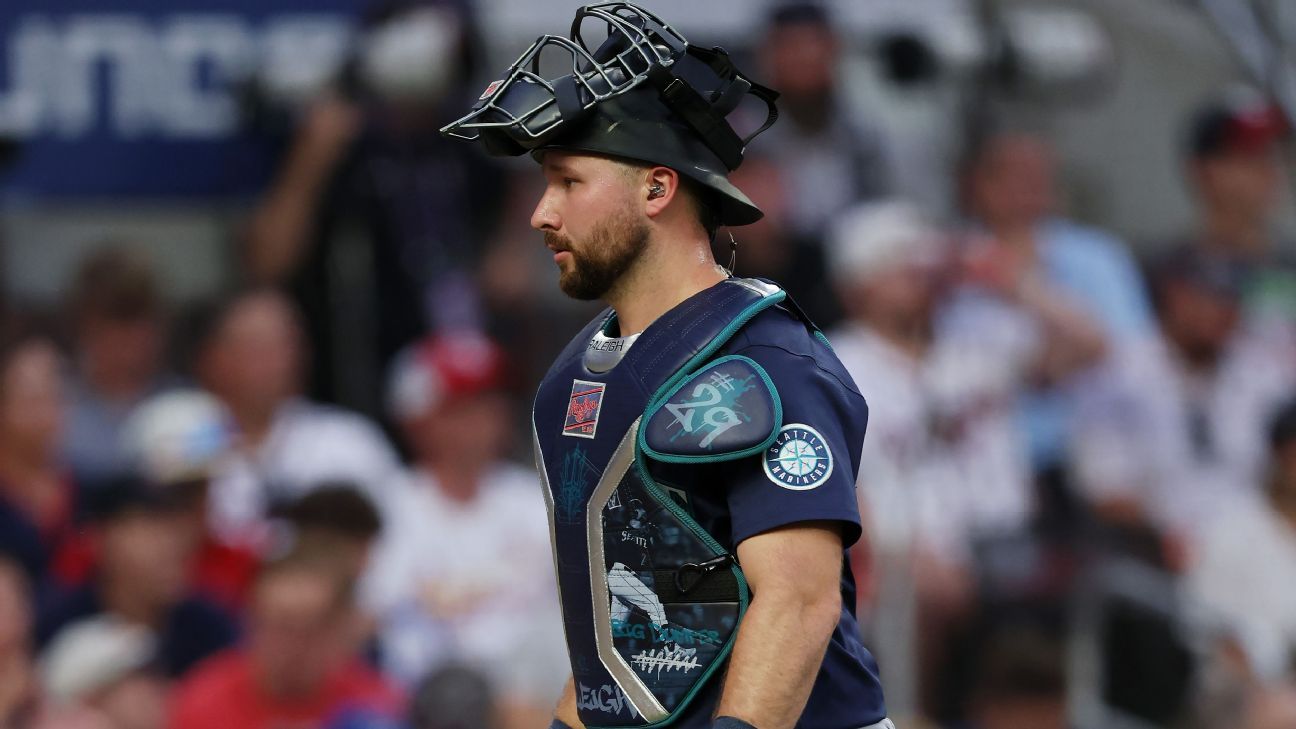
The Cal Raleigh receiver, from the American League, wins 1st challenge through Umpire Robot in Star Game, in punch to Manny Machado
Atlanta – Cal Raleight was so successful in it First challenge through him Umpire robot during the Star set like the one He had achieved in it Home run derby.
He receiver of Seattle Mariners appealed to the Automated ball and strike system in the First entry of the duel on Tuesday, making it It will decree a punch against Manny Machadoof San Diego Padres.
“You take them in any way you can,” said Detroit Tigers pitcher Tarik Skubal, from the mound.
Skubal had allowed a double of two races from the Dominican Ketel Marte and withdrew Freddie Freeman, from Los Angeles Dodgers with a shot for his first out. He advanced to Machado 0-2 on the account.
He then launched a speed change of 89.5 mph, and the Umpire of Home Dan Iassogna shouted: “Low ball!”
Raleigh touched his helmet, activating a review by the computerized Umpire that was tested in this year’s preseason and could be adopted for use in the regular campaign in 2026.
“I think it’s a strike,” Raleight told Skubal in a conversation captured by the microphones they carried for Fox transmission.
An animation of the computerized analysis was shown on the Truist Park screen and in the transmission. The national league manager, Dave Roberts, laughed at the Dugout after the challenge.
Before the game, the commissioner of the greatest Rob Manfred indicated that the 11 -member competition committee will consider the system for the next season.
“I think the ability to correct a bad decision in a high pressure situation without interfering with the game time because it is very fast is something we should continue chasing,” said Manfred.
Automated system decisions can have an error margin up to 1.2 centimeters.
“Our boys have a concern with that half inch and with what that could imply in regards to the number of challenges you can have if you keep those challenges during the course of the game,” said the head of the Tony Clark union to the Association of Baseball Writers of North America. “Do you need to have any kind of damping zone consideration? Or do we want to meet in a world where we focus on the most serious mistakes?”
Manfred was less worried.
“I don’t think technology supports the notion that you need a damping zone,” he said. “I don’t know why someone would want to think that there is something that is not a Strike and that you are going to mark in a review system.”
The major leagues establish the upper part of the automated Strike area in 53.5% of the stature of a batter and the lower part in 27%, based on the decision at the midpoint of the plate, eight and a half inches (21.5 centimeters) from the front and eight and a half inches from the rear. That contrasts with the area of the regulation marked by the referees, which says that the area is a cube.
“We have not even started talking about the Strike area itself, how it will necessarily be measured, and if there are adjustments that also need to get there,” Clark said. “So there is a lot of discussion that still needs to be carried out, although it seems something rather inevitable.”
