
When the AFA asked Barcelona for ‘Leonel Mecci’
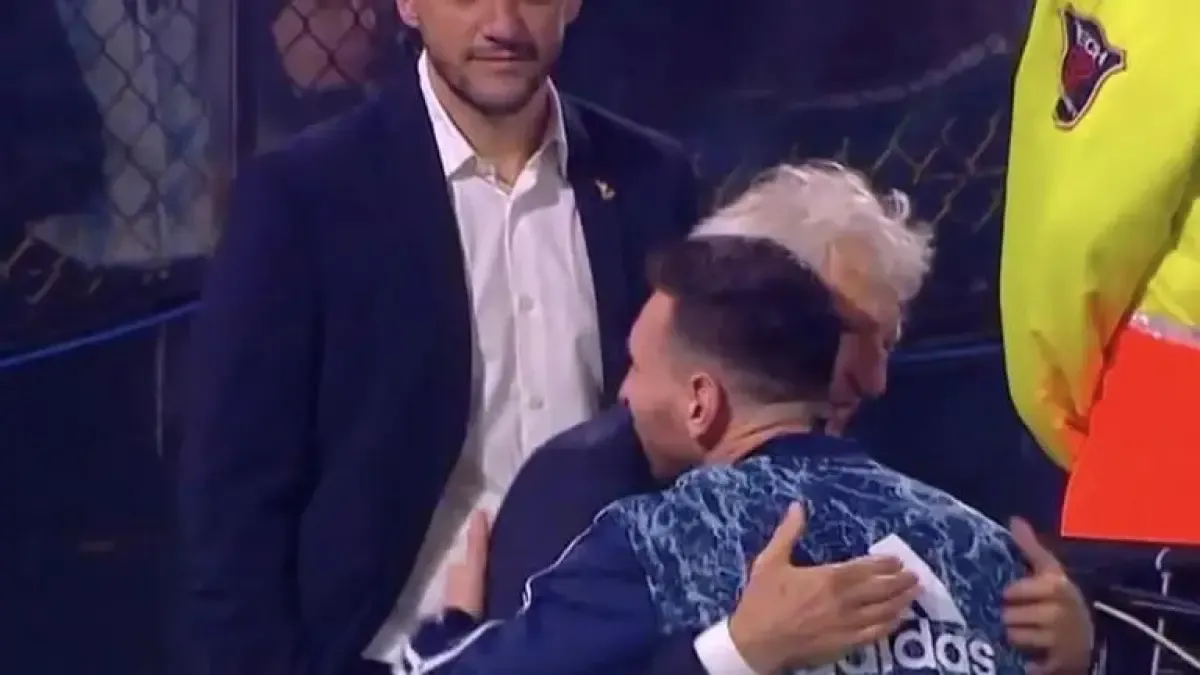
In April 2004, Joseph Pekerman had one of the greatest visions of his career as a coach and with insistence he managed to get the Argentine Football Association (AFA) to send the Barcelona a request to call up a young man to the U-20 team who, due to ignorance, he called ‘Leonel Mecci’.
This is what he told the press some time later Omar Soutowho was the manager of the Argentine national teams between 1996 and 2025.
At that time, Lionel Andrés Messi Cuccitini was unknown and only his father, Jorge, FC Barcelona and some youth team coaches already recognized his talent, among them Pekerman.
“I was in Spain, I went to see him in a match with the Barcelona youth team and I immediately knew that he was going to be the player of the future, that his story would be similar to that of Diego Maradona,” he said at an event in the Argentine newspaper Olé.
Pekerman was serving as sports director of Leganés, a club that competed in the second division of Spanish soccer, and went to see Messi amid growing rumors that not only was he “a phenomenon,” but that the Royal Spanish Federation wanted to call him up to the U-20 team soon.
Three-time youth world champion in charge of the Argentina team and recognized as one of the best trainers of footballers, Pekerman thought that a gem like Messi could not be missed, and he also knew that the then teenager’s desire was to play for the Albiceleste.
“At the 2003 U-17 World Cup in Finland we already had information about Lionel. Some members of the Spanish coaching staff told us that if Argentina had had that ‘kid’, they would have won the tournament,” he said in the talk with Olé.
Spain was the threat
Full of anxiety, he spoke with Hugo Tocalli, his friend and Argentina U-20 coach. “I told him that I was shocked, that Messi was the new appearance of Argentine football, a blessing, but that we had to hurry to call him up because Spain wanted him.”
Pekerman’s haste was due to the fact that between 2003 and 2020, FIFA prevented a footballer from changing national team if he had already played a match with another, in a rule that was governed by Article 18 of the Statutes of the entity.
“Tocalli told me that he already had the team assembled for the South American U-20 in Colombia. I told him that it was not necessary for him to play that tournament, just that he play a friendly soon, with an international referee, have him sign the form, send it to FIFA and that’s it, so Spain could not call him up,” he added.
Tocalli accepted Pekerman’s request, but ‘passed the buck’ to convince the then president of the AFA, Julio Grondona.
“I told Don Julio to look for the opponent, that I didn’t care who it was, and that I only set one condition: that the match be played at the Argentinos Juniors stadium. I told him that Messi’s story was going to be a story similar to Maradona’s, so he laughed and told me: you have faith in that boy.”
First it was ‘Caradona’, then ‘Mecci’
The story of both geniuses had similarities at the beginning, since they debuted on the same court and with a coincidence: the errors in their names. While the AFA’s message to Barcelona said it cited Leonel Mecci, the Clarín newspaper published a note about a certain Diego Caradona, who dazzled in a children’s team called Los Cebollitas.
Grondona played two friendly matches against Paraguay, in Asunción and in Buenos Aires, precisely at the Argentinos Juniors stadium, the team where José Pekerman also trained as a professional player. The only thing missing was for Barcelona to say yes.
Although the Catalan club was reluctant, it ended up giving up Messi, who appeared at the Albiceleste stadium in Ezeiza on June 25, 2004, one day after his 17th birthday.
On June 29, Argentina and Paraguay met in the second friendly, with the Rio de la Plata team winning 8-0. Messi replaced Ezequiel Lavezzi in the second half, played with number 17, scored the seventh goal and provided the assist for the fifth.
Finally, Tocalli took him to the South American U-20 in Colombia in 2005, where the young talent born in Rosario showed that he was going to star in one of the most prolific stories of any footballer. Already at the World Cup in the Netherlands, in June of that year, he won his first world title, at the age of 18.
Just two months later, on August 17, Messi made his debut in the Argentina senior team, which already had Pekerman as its coach. It was in a friendly that the Albiceleste won 1-2 against Hungary in Budapest. The world of football began to contemplate one of the most wonderful players.
