
Spain, the country with the most foreign players and one of the countries that promotes the least young people
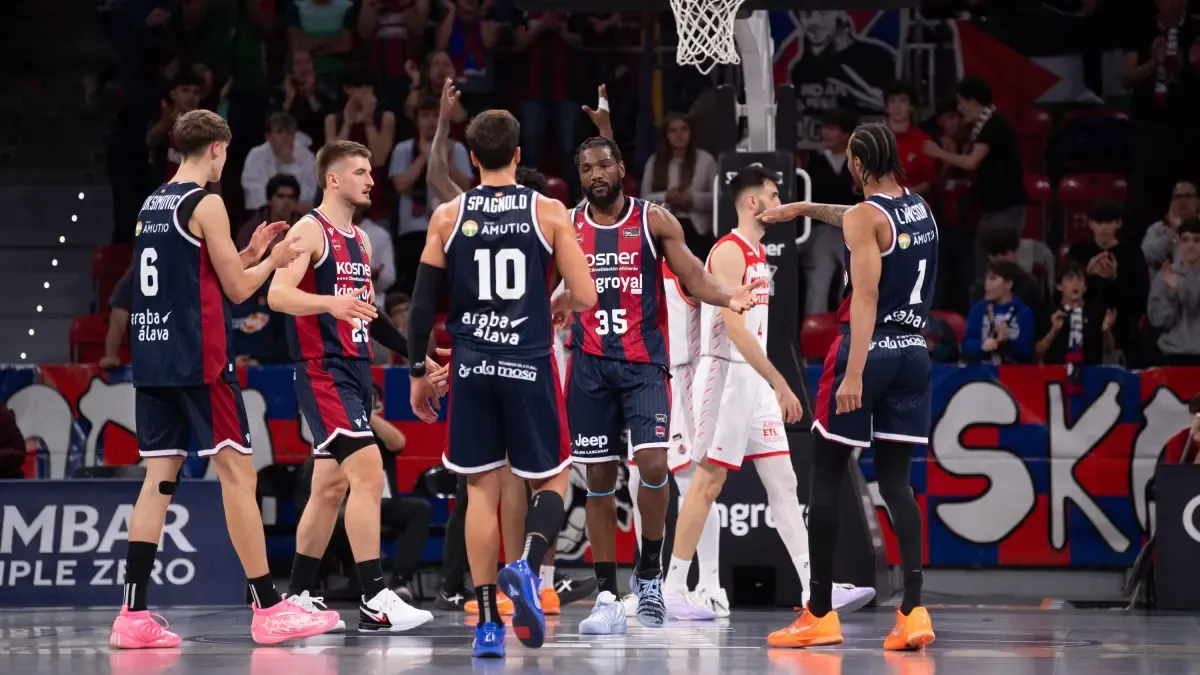
The Endesa Leaguethe highest competition in Spanish basketball, leads the balance of negative impact regarding the import and export of players, with a negative rating of 288, according to the ‘FIBA Migration Report’ report, prepared by the international federation.
This document aims to analyze trends in player movement and other aspects of basketball worldwide. To do this, it analyzed the main world leagues during the 2025/2026 campaign.
Although Spain It is the second country that exports the most players to other leagues (670 players), only behind the United States (2,372), and with a wide advantage over France (633), its absolute leadership in the arrival of foreign players (958) gives the League Endesa an unfavorable balance of -288.
The same report shows that Spain It is the country with the highest percentage of foreigners (72.9%) ahead of Turkey (61.2%) and Israel (59.9%) and one of those with the lowest incidence of young people with only 7.7%.
Only Japan (7%) and Australia (4.9%) are below in this classification that measures the participation of U21 players.
Although the percentage of foreign players has reduced (from 75% to the current 73%), Spain has increased in the ACB the number of nationalities (55) while at the same time the importance of native players loses in points and minutes compared to foreigners.
Europe on the move
In the 2025/2026 campaign, a new record number of international transfers was reached, with 14,194 operations.
Europe It continues to be the main reference with 5,428 operations in that season, which represents an increase of 228 transfers compared to the previous period.
Furthermore, 9 of the 10 most frequent transfer routes include the United States.
The NCAA an increasingly frequent escape route
Once again, there has been a record number of players opting for the American university league route (NCAA), driven by contracts NILthe legal avenue that has opened the door for companies to sponsor university athletes in USA.
“FIBA is aware that players face numerous challenges when making an international transfer; therefore, we continue to work diligently with our 212 national federations to support them, both through the letter of authorization process and through the FIBA licensed agent system,” said FIBA Secretary General, Andreas Zagklis.
Both in the men’s category (1,055) and in the women’s category (1,042), the basketball of the NCAA reached record numbers, surpassing the barrier of 1,000 international players for the first time.
