
Shintaro Orihara, Honda track boss: “I understand the frustration that Fernando Alonso felt. In certain circumstances, the engine has lacked robustness. We have applied hardware and software countermeasures to improve it in these conditions”
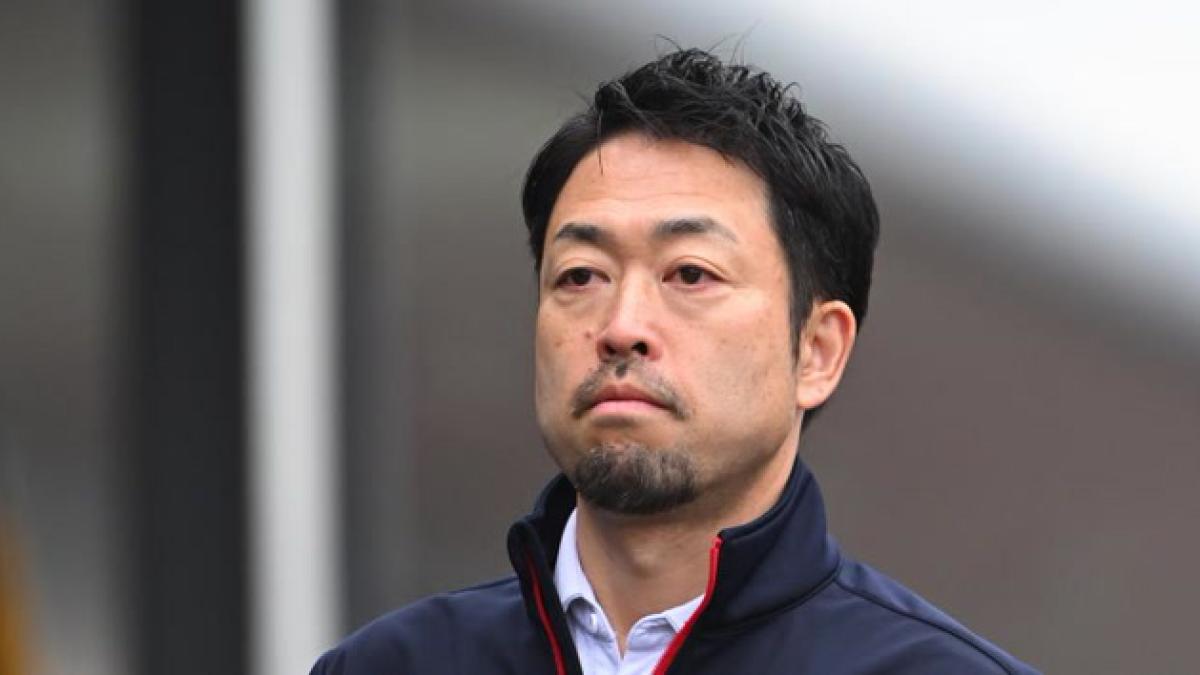
Shintaro Orihara, Honda track managerlike every Thursday, sat next to Mike Krack, Aston Martin track managerbefore the start of Brazilian F1 Grand Prix to attend to the media.
In that traditional press conference, the Japanese engineer showed his face behind the repeated problems suffered by Honda engines in Mexico, affected by the altitude of the Hermanos Rodríguez Autódromo, located at 2,200 meters with respect to sea level.
On a weekend in which the AMR26 He was showing himself to be very competitive in the middle zone, close to the Top-10 and with serious options to fight for the points in the race, Fernando Alonso saw how everything went to waste after his first lap of Q1 in qualifying, when his engine failed and prevented him from fighting to get into Q2.
De la Rosa, Aston Martin ambassador, then warned that starting from behind in the race, with traffic, things would be even more difficult because engine cooling would become even more complicated. And finally, Fernando, who already suffered a clear lack of power at the start, saw his race last 6 full laps, the same as Stroll.
Both Aston Martins had to retire on lap 7 when they detected “abnormal pressure levels in the power unit systems”, with problems related to the electrical system (ERS). And after an analysis of what happened, Orihara explained himself and was understanding of Fernando Alonso’s anger when getting out of the car.
“It was a complicated Grand Prix for Honda, and I perfectly understand the frustration that the pilot (Alonso) felt. Learning focuses on our engine: in special circumstances, it has shown a certain lack of robustness. “We can always learn lessons from these types of problems and take them back to the factory to prevent them from happening again in the future,” he added.
The Japanese assured that in Mexico, where the altitude is 760 meters, they will apply corrective measures or countermeasures to improve the “robustness” of the system and ensure that these setbacks are not replicated.
Although we do something similar in free practice, the conditions are always different. Under these special circumstances, our engine behaved somewhat anomalously, it was not according to what we had planned, and this caused an overload in the ERS cooling circuit, which led to a failure in the MGU-K.
“I can’t give specific technical details, but I will give a general idea: For example, before the race we have the return to the grid, which is a particular situation, and both in qualifying and in the race, we do a tire preparation lap. Although we do something similar in free practice, the conditions are always different. In these special circumstances, our engine had a somewhat anomalous behavior, It was not according to what we had planned, and this caused an overload in the ERS cooling circuit, which led to a failure in the MGU-K. “This happened both in qualifying and in the race, due to the high altitude of Mexico,” said the Japanese engineer about problems that the simulations prior to Mexico did not foresee.
When we talk about the cooling circuit, we are referring to something other than the cooling performance itself. It was simply a mechanical failure.
“In some cases, especially with the problem we had in Mexico, it was difficult to identify it in a simulation, but it is possible to detect it in the dynamometric bench tests (in Sakura). Therefore, that experience will be incorporated into our bench testing program.”he expressed.
And he also made it clear that the setback had nothing to do with traffic on the track, but with a failure in the system.
“Actually, our problem was not directly related to traffic. It is true that running in clean air helps the power unit function, but that (traffic) was not the direct cause of the failure. When we talk about the cooling circuit, we are referring to something other than the cooling performance itself. “It was simply a mechanical failure,” Orihara explained.

Learning for 2027
Orihara tried to see the positive side of the disaster: that what they saw in Mexico helps them learn for the creation of the 2027 engine so that these problems are not repeated with the power unit they are creating for next year.
“Right now, our factory is focused on the power unit for 2027, so we can take advantage of this experience to improve the robustness of next year’s engine. Mexico was a difficult race for us, but from there we take away valuable experience for next season’s engine,” he said.
Right now, our factory is focused on the power unit for the year 2027, so we can take advantage of this experience to improve the robustness of next year’s engine.
Can it be repeated in Brazil?
“Brazil, although not the same as Mexico, is also located at a considerable altitude (760 meters above sea level, far from Mexico’s 2,200). Therefore, we have implemented corrective measures, both at the hardware and software level, to improve our robustness in these conditions,” said Orihara.
At his side, Mike Krack, expressed hope that many of the setbacks seen previously will not be reproduced in the engine this weekend.
“Upon arriving here, we have seen that it is much colder. We are at a higher altitude, although very similar to Spa or Austria, so I think that many of the problems we have seen previously will not be repeated here,” commented the Luxembourger.
