
Record audiences and full stadiums: the success of the new women’s Champions League
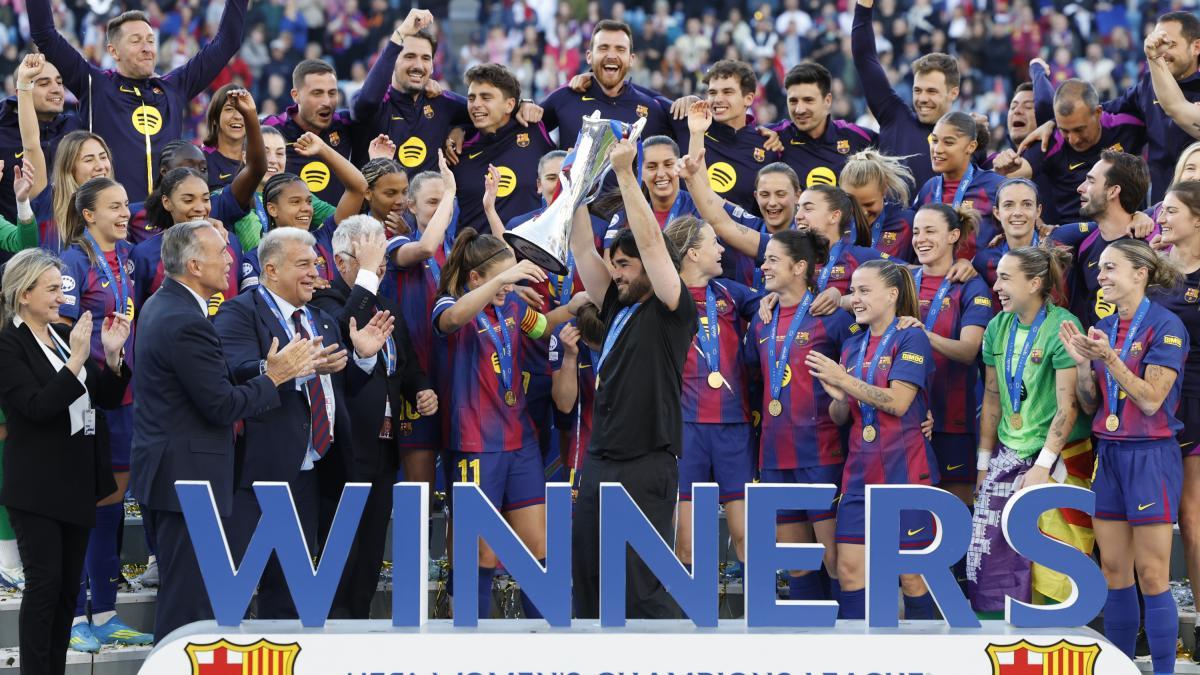
The 2025/26 season will be marked as a turning point for European women’s football. The final played in Oslo, where FC Barcelona won against Olympique Lyonnais to win a new UEFA Women’s Champions League, It also served to confirm the success of a new competitive model promoted by UEFA.
Beyond the Barça triumph, the course has marked the debut of a renewed structure that seeks to expand opportunities, increase competitiveness and strengthen the development of women’s club football throughout the continent. A format that increases competitive equality
This season, the main continental competition launched a new league phase that has generated more unprecedented confrontations and greater uncertainty in the results. The data reflects a more balanced competition, with a significant reduction in comprehensive victories and an increase in matches decided by a single goal or resolved with comebacks.
UEFA highlights that almost half of the matches ended with close scores, while the comebacks had a much higher presence than that recorded in previous campaigns. The objective was to offer more excitement and variety, something that, according to the European body, has been achieved from the first phase to the playoffs.
he growth of interest in women’s football has also been reflected off the pitch. Even before the final, the competition had accumulated close to 40 million viewers, a figure that will exceed 44 million when the final data for the decisive match are tallied.
The final played at the Ullevaal Stadion in Oslo also became a historic event for Norway, setting a new attendance record for a women’s football match in the country.
The semifinals also showed the leap in dimension of the competition. Reference venues such as the Camp Nou, the Arsenal Stadium, the OL Stadium or the Munich Football Arena hosted decisive matches in front of thousands of fans. The digital push continues
Digital platforms have established themselves as one of the main drivers of growth. During the season, the competition’s official channels recorded nearly 950 million video views, 50% more than the previous year.
Added to this are almost 1.5 billion impressions and more than 50 million interactions on social networks, figures that show an increasingly larger and more committed community of followers.
The Europa Cup expands opportunities
The big news of the season was the launch of the UEFA Women’s Europa Cup, a second continental competition designed to offer a European tour to more clubs.
The new tournament brought together 43 teams from 28 national federations and allowed many entities that were previously eliminated in the previous rounds to maintain their presence in European competitions.
The first edition concluded with an all-Swedish final, in which BK Häcken defeated Hammarby to become the first champion in the tournament’s history.
