
Martí Cifuentes: “I like my teams to be brave”
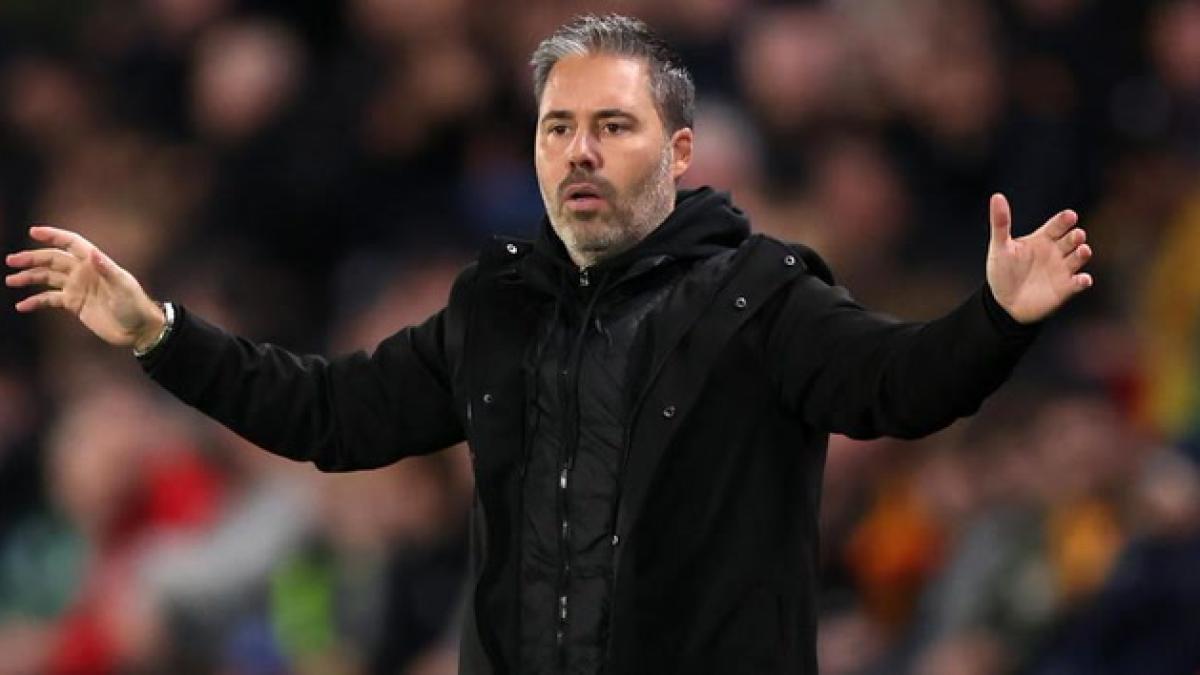
Marti Cifuentes (Sant Cugat del Vallès, July 7, 1982) is one of those Spanish coaches who has built a good career abroad. From Catalan football to Scandinavia and from there to England, where he managed Leicester until January. He recently chatted with Mundo Deportivo about his career, where it is going and much more.
He has chained one position to another and had been non-stop for 10 years.
Yes, I left in 2016 for Sweden thinking it would be an experience for one year and in the end I spent eight years in Scandinavia and almost three in England.
How do you rate your experience at Leicester?
It is not the outcome we wanted. The expectations when signing were different although we knew that it was a moment of transition for the club. We started the season very well, but then there were difficult things to manage. It’s a shame because it is a very big club with very good fans.
Is there little patience in football?
There are exceptions, but in general there is a lack of awareness as to what a process entails. Both fans and properties sometimes think that coaches have a magic wand and the reality is that there are processes that take time. In football, the only thing that gives you time are victories. Coaches like Arteta at Arsenal or Klopp at Liverpool did not have it easy in their beginnings.
It is important to find contexts and scenarios that help the player get the best out of themselves.
What would you highlight about English football after these experiences at QPR and Leicester?
The Championship (English Second Division) is a very competitive and very tough league. There is a lot of direct play and it is very demanding.
What are your teams like?
I fell in love with football when Johan Cruyff arrived at Barça, with the ‘Dream Team’. I fell in love with that way of playing. I try to make my teams attack constantly. I don’t believe in possession as a goal, but as a tool to dominate games. I like my teams to be brave and try to recover the ball as soon as possible, but then you also have to be aware that training in one place or another is not the same.
How has it changed since you left Catalan football for Sweden in 2016?
We all evolve over time, but the idea of having an offensive mindset hasn’t changed. I have the enthusiasm and desire intact, but one tries to mature and learn from all the experiences and improve every day.
What is more difficult, creating a game model or getting players to believe in it?
The important thing is to get performance. All of us coaches have a perfect idea in our heads of how we want our teams to play, but then it is important to find contexts and scenarios that help the player get the best out of themselves. The players have to be the protagonists, that is essential.
Football is in a constant process of change and evolution. Where do you think you are going?
There is more and more pressure on men. That leads to a type of match where there can be shorter transitions and a lot of back and forth. I think football is going towards that, with high physical demands.
I do not believe in possession as a goal, but as a tool to dominate games
What do you think of the ‘Wenger Law’ and changing the offside rule?
I am romantic, purist and in favor of touching the rules as little as possible. I think it would result in teams defending lower and that would be detrimental to the show.
Is the Spanish coach better valued abroad than in Spain?
It is a reality that the level of the Spanish coach is very high. And when it comes out it has the ability to adapt well to the context. In the Premier three of the four best classified are Spanish and Luis Enrique has won his second Champions League.
What is the next stop on Martí Cifuentes’ journey?
We will see. If you ask me 10 years ago I would not have imagined this trajectory. I am open to continuing in England and also to other projects. The important thing is to find a place where you feel comfortable.
And return to Spain?
Yes, I would like to train in Spain again one day. Not only in the First Division, in the Second Division there are also teams of high level and history. It doesn’t obsess me and the important thing is to find the project that motivates me, but I am always up to date with Spanish football and I would be excited.
What dream do you still have to fulfill as a coach?
Many. I’m still a young coach. Managing in one of the five major European leagues is a fairly clear goal, but in the end I try to enjoy the journey and grow day by day. All these dreams are fulfilled when one works honestly.
