
Franco Colapinto closed a weak time at the Japanese GP
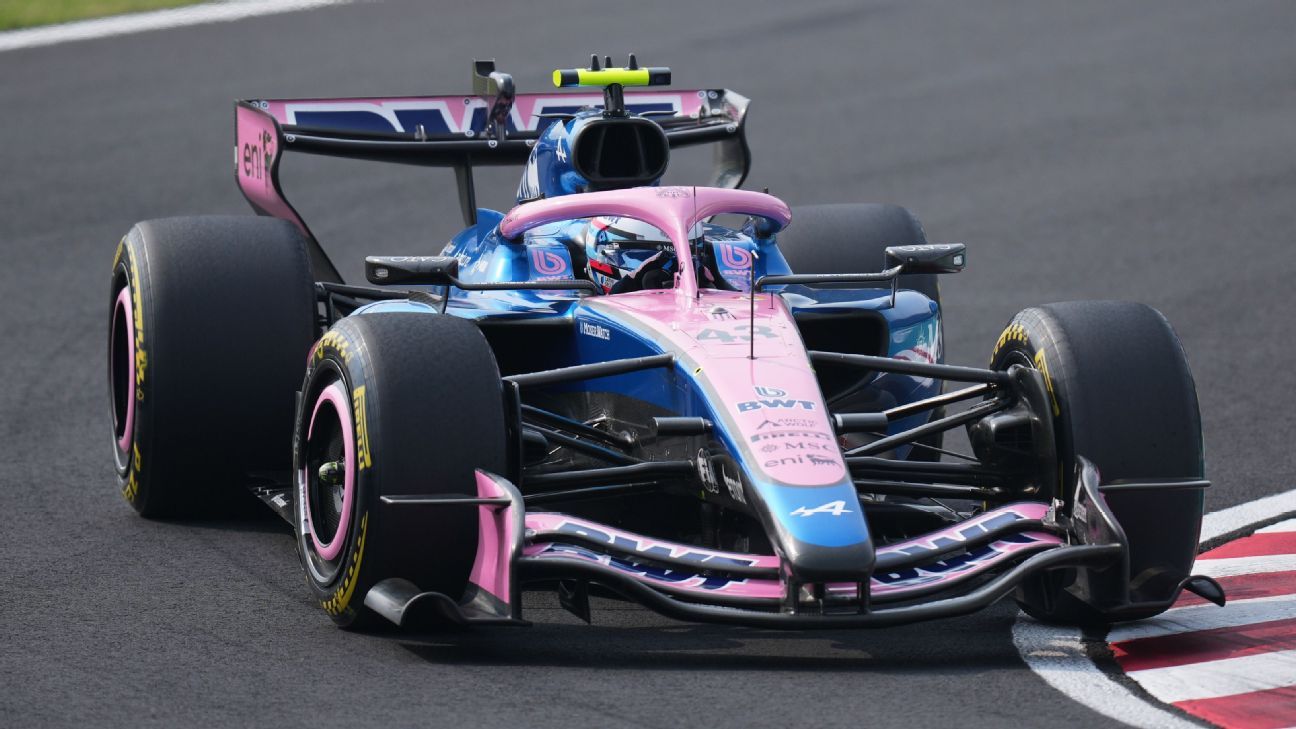
The Argentine driver did not find rhythm throughout the Suzuka weekend, finishing 16th and was far from his teammate Pierre Gasly, seventh. The one-month break without races will be time to work at Enstone.
Each race is a world in itself and a good performance in one Grand Prix is not transitive to the next. And Franco Colapinto is the perfect example of that. The Argentine driver had just achieved his best performance in Formula 1 in the Chinese GP, the second date of the 2026 year.. After a difficult start to the weekend, the work of the Alpine team and Franco’s extraordinary driving work rounded off a brilliant performance, which closed with his first point since his arrival at the French team. cWith its rising shares it arrived in Japan, but all that remained in memory. The passage through Suzuka was very complicated for Colapinto, who finished 16th and far away.
Colapinto was difficult from the beginning of the weekend. On Friday it suffered from understeer in the fast sections, problems that the A526 had already experienced in the fast sections of Melbourne on the first day. The condition affected both drivers equally, because Pierre Gasly also had it. The work of the engineers to improve this lack of load in the front axle generated an improvement on Saturday, but for the Argentine the suffering continued. He didn’t find a rhythm on the qualifying lap, He passed the Q1 cutoff just enough and had no chance of reaching Q3.
Colapinto hoped to channel any loss into the race in that fastest lap that never came out in Suzuka. But the most worrying thing about the Argentine’s boxing side was the enormous gap with respect to Gasly. The difference between the Frenchman and the Argentine was, by far, the largest between teammates in all of F1 in Japan. They were seven tenths average in each start. But the race pace shown in training seemed to be the incentive for the Buenos Aires native.
In the competition, Franco had a good start (one of his strengths every weekend) and closed the first lap in 14th place, one ahead of his starting position. But in Japan what all the drivers had warned happened: overtaking cars would be very complicated. Old school circuit, narrow, everything seemed difficult. To make matters worse, except for Valtteri Bottas with his Cadillac from another category, everyone started with the same strategy: medium tires for a hard stop and goodbye. The chances of advancing were not many like that. Added to that was the fact that Colapinto, who had stuck 13th behind Liam Lawson without being able to pass him from the third lap after overtaking Gabriel Bortoleto, the timing of the safety car entry did not benefit him at all due to the tremendous accident involving Oliver Bearman, from which Colapinto was miraculously saved.
After losing the place again with Bortoleto’s Audi on lap 17, the Alpine driver stopped on lap 18 and some of his most direct rivals in those fights he had in the middle of the pack stayed on the track. That lot took advantage of the safety car on lap 22 to stop (like the New Zealander from Racing Bulls, the Audi duo and Carlos Sainz) and they all returned in front of Franco. That condemned him even more in his career. Colapinto was 16th at the restart and that’s how he arrived, stuck in that position. There were two possible scenarios left in the air that did not occur. Without the safety car, if the expected undercut went to Alpine, the Buenos Aires native could have finished 12th or 13th after everyone’s stops. And if the Argentine had been caught by the safety car without his stop being completed, he could have been tenth or 11th in the restart. But history was written differently.
In the last 25 laps, Stuart Barlow, the Argentine’s track engineer, at times asked his pupil to quicken the pace to try to firmly attack Carlos Sainz, who was once again in front of him, as in Australia (he managed to overtake him) and in China (he closed the race behind). Colapinto complained of problems with the turbo of his Mercedes-Benz power unit at some stage of the race. But he never achieved a strong rhythm to attack the Spaniard from the Grove team.
After the checkered flag, Colapinto asked about Bearman and told his engineer that he had to work. “I don’t understand this,” he said, as Barlow told him they had no luck with the safety car. Colapinto’s biggest concern at the end of the race was the gap that Gasly had throughout the weekend. Those constant seven tenths were reflected in the final seventh place of the Frenchman, who has scored points in the three races held so far.
Colapinto had no luck with the safety car, but he was not strong in the Japanese weekend either, especially in qualifying, a key moment on a track like Suzuka. His weak Saturday complicated the rest, because on Sunday he left far away. And from there everything went uphill. From his best performance in China to a weak time in Japan. Now the April break will arrive without races due to the cancellations of Bahrain and Saudi Arabia. At Enstone, a lot of work will be done (as in the bases of the rest of the teams, of course) to improve performance and find a way to narrow that gap that Gasly showed in Japan. The next stop will be in Miami, during the first weekend of May.
