
At Aston Martin they were amazed by Fernando Alonso: “He has a special ability to compensate for the limitations of a damaged car. It was impressive”
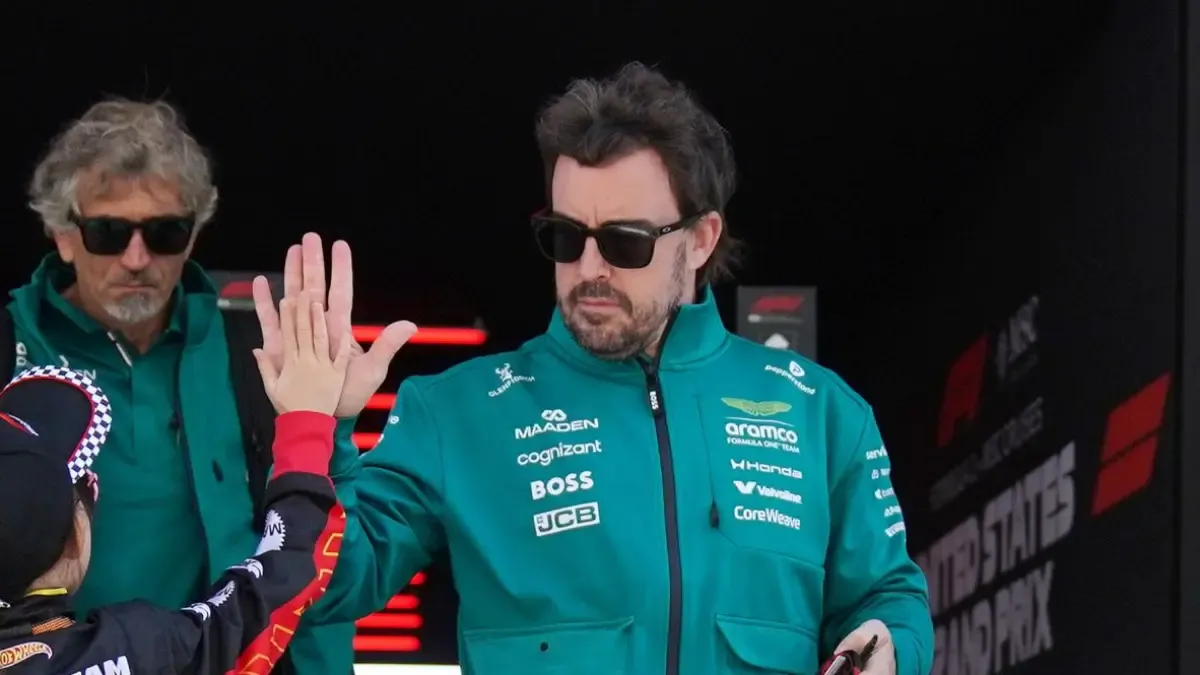
Mike Krack, Aston Martin track manageris a man who rarely talks about spectacular things or surprises. Of those who do not believe in magic and do believe in data. In fact, once when MD asked him about Fernando Alonso’s surprising performance in some events where the simulations placed the green car lower than what Fernando achieved later, he never showed enormous surprise. Therefore, the response that the Luxembourger gave to the written press before the 2026 F1 Mexican GP is striking.
In the Aston Martin hospitality, in Mike Krack’s traditional press conference with Honda’s track manager, Shintaro Orihara, the Silverstone team engineer was very surprised by the pace that Fernando Alonso was able to show in Austin, better than even teams at the top of the middle zone such as Racing Bulls or Alpine, despite having the car destroyed from the first lap due to a touch from Alex Albon.
Obviously, I’m not going to give you the figure, but we know how much we lost. Alonso has a special ability to compensate for the limitations of a damaged car. It’s something impressive
That accident caused serious damage to the floor and left side of Fernando’s car, as well as damage to the front wing. And then, it caused him to lose part of the front wing, which he had to change during a stop that was not scheduled.
When asked about the exact points of downforce that the car lost in that accident and Fernando’s great performance in pace in the long run despite the damage, Mike Krack took his hat off when talking about Fernando.
Perhaps it is because they do not see exactly (from the passenger compartment) which part of the car is damaged, but simply notice how it behaves. But I think it was really impressive.

“Obviously, I’m not going to give you the figure, but we know how much we lost. Alonso has a special ability to compensate for the limitations of a damaged car. It’s something impressive. Sometimes it happens with certain drivers: the car is in conditions that, in theory, should prevent you from riding like that and, even so, they achieve extraordinary performance,” he commented.
“Maybe it’s because they don’t see exactly (from the cabin) what part of the car is damaged, they just notice how it behaves. But I think it was really impressive. He knows the numbers, so…” Mike said before Fernando Alonso
Austin’s pace: “It’s encouraging”
“We have assessed the damage and we have a lot of data. We lost performance, without a doubt, and we lost it in different phases of the race. First, at the beginning, when the left part of the flat bottom was missing. Then, later on, we also had to change the wing. Where would we have ended up? What performance would we have had? In the end, these are all hypotheses.”
“I think the positive thing was that, despite the damage, we were able to stay in a reasonable position. We were still far from the points, to be honest, but it’s encouraging. I’m not a big fan of speculating about what could have happened, because we can’t go back. But it is encouraging to see that we are in a better situation, even with the damage.”
Pace difference between Austin and Singapore
“Do we understand? Yes and no. There are still some unknowns, for sure. But I would say that Austin was a more normal weekend, where everything we did worked as it should. The exception was that the pace on Sunday was perhaps better than we expected.”
I would say Austin was a more normal weekend, where everything we did worked as it should. The exception was that Sunday’s pace was perhaps better than we expected
In Mexico, 90 degree curves like in Singapore
“In Texas, the car performed quite well in terms of track performance. We were pretty much always at the front of the middle of the field. And as far as what you’re saying about the Singapore corners and so on, it all comes down to the details. It’s not just about drivability, although that’s a factor too. It’s always hard to predict. There’s the performance of the chassis, but there’s also the power unit involved, and vice versa.”
“That’s why I think we have to work very well together to get the car to turn correctly here and have a good response when exiting the corners. Nowadays you can no longer simply say that the chassis does this or that. The cars are so integrated that it is very difficult to distinguish which aspects work well and which contribute positively to the performance. On paper, yes, we are quite clear about what to expect and we are optimistic.”
“It’s a circuit that shouldn’t go too badly for us. But we said the same thing in Singapore, so for now, I think we’ll be fine. Especially given the altitude and all the factors I’ve mentioned. There are too many variables to make a prediction.”
Nowadays you can no longer simply say that the chassis does this or that. The cars are so integrated that it is very difficult to distinguish which aspects work well and which contribute positively to performance.

In Austin, his straight line performance was good
“The first thing we try to do is find the best solution for us. What is best in terms of energy deployment and energy management? But our optimal solution does not always coincide with that of others. If you change one of the parameters, for example, the ailerons or the level of downforce, it also changes the energy deployment or the way of using it.”
“There are many factors that play a role and can vary between different cars on the grid. Sometimes you can deliberately choose a set-up that makes the car look very fast in a certain sector, for example. As performance is now less dependent on set-up and operating conditions, comparisons are more complicated. Before, all the teams had more or less similar set-ups and you could compare top speeds, drag and pretty much everything else, knowing that the whole grid was working within a fairly narrow range. Now teams choose how to deploy energy for strategic reasons”.
“If I’m defending a position, I’ll obviously opt for a different profile than if I were attacking. And if I have the faster car, I can get away in front and manage the situation in a different way. There are different modes to choose from and I think that can influence what you have observed. We have also seen the same thing.”
