
Albert Rudé: “It is one thing for the player to understand you and another to convince him”
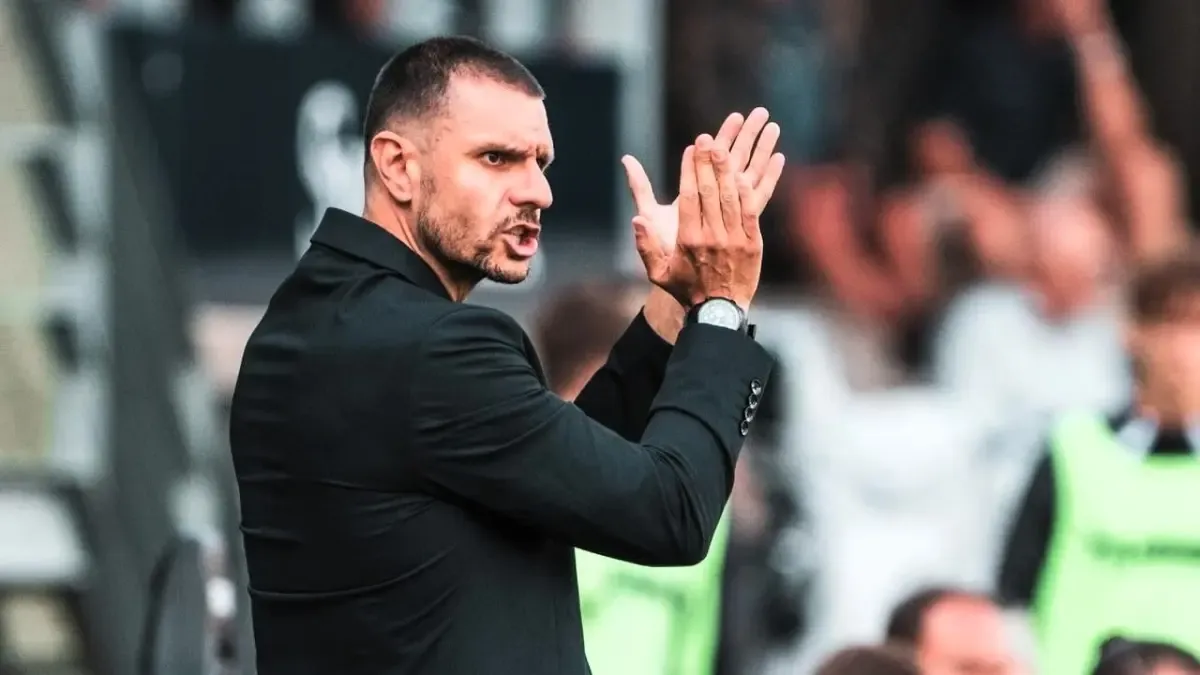
Albert Rude (Ripoll, September 18, 1987) is a young technician but he has already worked around the world. Assistant to Diego Alonso in his day in Pachuca, Monterrey and Inter Miami, he has already coached Alajuelense in Costa Rica, Castellón in Spain, Wisla Cracovia in Poland and Kolding in Denmark. He has in his record a Polish Cup of which he was champion with a team that was in the Second Division and he looks forward to the next stop, still to be finalized, on his journey through the benches. About the past, the present and the future, but mainly about football, he recently chatted with Mundo Deportivo.
What is your assessment of your latest experience in Danish Kolding?
Very positive, both for life and for football. We were involved in a very ambitious project and we did a good job. The word process in football cannot be said very loudly because it is almost non-existent. Everything goes very fast. They offered us three years and we tried. After a year and a half, the project ended because the club’s vision and mine were on different paths, but the balance is still very positive.
He was faced with the challenge of changing the team’s playing style a lot.
Yes, many people told me that they didn’t know if in a Nordic country and with a very young team it was going to work for us to play with a positional style of play, but we showed that it would. In eight weeks of preseason we can make a radical change in playing style, that’s what this experience tells us. We had doubts, but we did it. We managed to get the team to be the protagonist with the ball, pressing very high although without giving up the low block when it was time.
He even had offers from higher level teams than Kolding in Denmark, but he rejected them.
These are decisions that you have to base on criteria and we decided to base them on professional ethics. Six months after arriving, a Super League club called me, but I had signed a three-year contract and I considered that I couldn’t leave.
No matter how good you are at a tactical level, if you don’t have leadership it will be very difficult for your team to succeed.
Diego Kochen, Barça’s goalkeeper, has gone on loan to Denmark, to Lyngby.
I think it is a good decision on their part, it is a very interesting market. In Denmark they bet on young talent and they really bet. There you will have the opportunity, and if you take advantage of it you will be recognized.
You are a young coach, but you have already been to Mexico, the United States, Costa Rica, Castellón, Poland and Denmark. What would you say to the Spanish coach who is hesitant about going abroad?
I don’t feel so young anymore because there are coaches who are 30 and few are stepping very hard. In Spain there is very good training and abroad you can have a great impact. You can also stay here and have a great career, but leaving is always very enriching, because it forces you to adapt to the circumstances. The coach has to be adaptable to a fault.
What identifies you most as a technician?
Leadership and the cultural issue. I am a very demanding coach but one who accompanies the player a lot. I like to train but also compete. And I try to play very daring and be the protagonist with the ball whenever possible. You can be dominant with the ball or with spaces and you have to define how you want to be. I enjoy watching teams that play on the counterattack, but it’s not in my blood. I have to convince the players how I want us to play, and if it’s not in my blood they smell it.
Which three coaches have had the most impact on you?
Pep Guardiola had a lot of impact on me during his time at Barcelona. Also the version of Klopp with a more vertical position, which is something I identify with a lot. And also De Zerbi, because of how he gets out of one-on-one pressure, for example using the goalkeeper.
He did the latter a lot in Kolding, using the goalkeeper to get the ball out.
Yes, you always have to try to find the free man and dislodge your rival.
How much does the coach’s leadership influence whether a team is successful or not?
It’s difficult to talk about percentages, but it’s the key. It is one thing for the player to understand what he has to do at a tactical level and another to convince him that he has to do it. No matter how good you are at a tactical level, if you don’t have that leadership it will be very difficult for your team to succeed.
What qualities does a young player have to have to reach the elite?
He has to be brave in both senses, in the game and on a daily basis. You have to live like a professional.
Football is going towards total adaptation, towards ‘what do I have and how can I be successful with what I have?’
What do you think of the World Cup?
Very interesting. All World Cups have certain tendencies. This year we have seen teams with a brutal capacity for withdrawal and I think that motivates coaches to look for solutions.
What do you think about hydration breaks?
As a coach, it undoubtedly changes the dynamics of the game because you can give very clear instructions and it can also cut dynamics. The player may become cold or emotionally disconnected.
Football never stops changing and evolving. Where is it going?
Towards total adaptation. What do I have and how can I be successful with what I have? It is increasingly difficult to have control with the ball and you need players who can repeat many high-speed efforts.
And your career, where is it going?
We are active in the market. There have been options, from Spanish football and abroad, but for now nothing has been finalized. I don’t care here or outside, what I want is to get to a project where I can be myself. And enjoy this sport, which sometimes is not so easy.
