
Neus Ávila, former tennis player: “I overcame a very serious car accident, I had my best results, but in tennis the difficult thing is to keep up, and I left it”
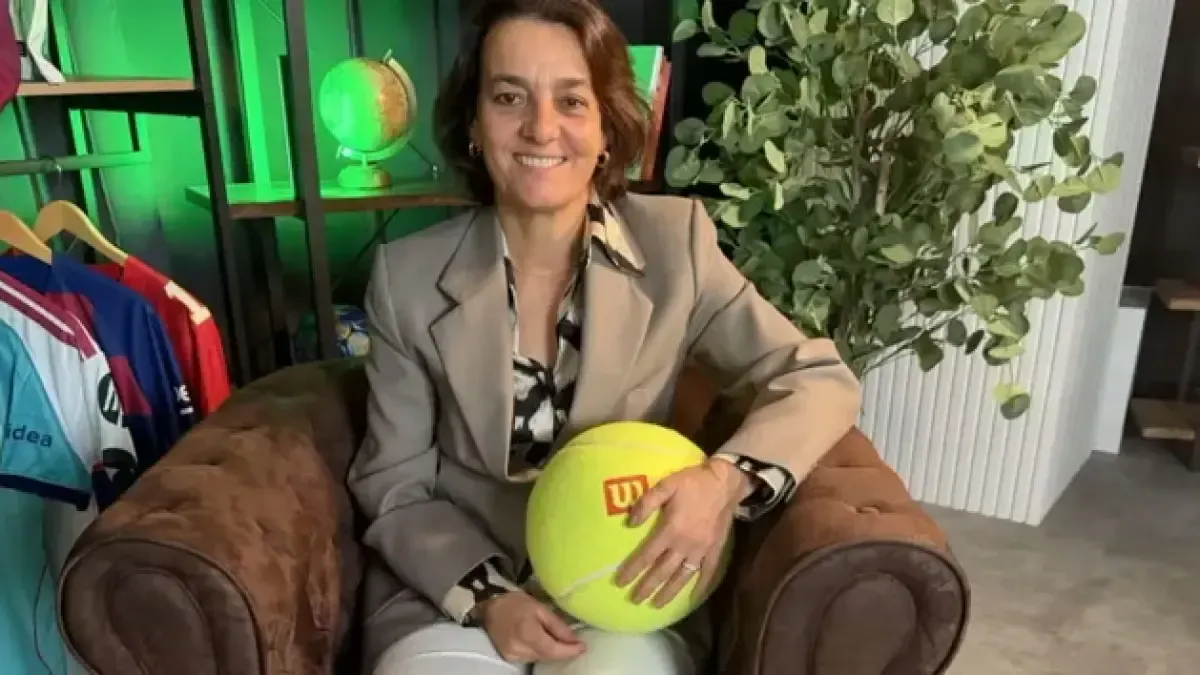
Neus Ávila (Lleida, 7/26/1971) He coincided in a call-up for the Spanish team with Arantxa Sánchez, Conchita Martínez and Vivi Ruano. She was 105th in the world, played Roland Garros and Wimbledon. She hung up her racket very soon, but she never left tennis, she continues to exercise multiple facets, as director of the Catalonia Open WTA 125, in a sport that “I love, as a player and now.”
He shared a generation with the great Spanish champions.
Yes, it is true that I am from Arantxa’s generation, exactly the same year, and from Conchita, who came a year later. Behind them, a series of players who obviously did not have their level, but who worked hard trying to find our place on the circuit. I can say that I am super proud of my career, of everything I did. I debuted in the Fed Cup, it was a dream to represent Spain at a professional level. And I played at Roland Garros, Wimbledon. That remains after so many efforts. I come from Lleida, I arrived in Barcelona very young, sun, training all day and more, at the same time studying because in my case my family was clear that tennis and studies went hand in hand. You had to work hard because you had to do everything right. I was 105th in the world, I am proud of what I did. It was an achievement for me.
You retired too soon.
I finished very quickly compared to today. I stopped playing when I was 26, 27 years old. I could have played something more. But it is true that I had a very serious car accident when I was 24 years old, which took me away from the slopes, from everything, for five months. It was very hard. Absolute rest. I recovered, I put all my effort and more to get out of this situation. I returned to the circuit, the following year was the best of my career, with the best results, the ranking, I played the best tournaments, Roland Garros and Wimbledon. I reached my peak moment, but in tennis the most difficult thing is to maintain those results the following year. It was complicated emotionally. There came a time when I considered leaving professionally. And start a new stage.
How is women’s tennis now?
Women’s tennis is very good. Now the players are more athletes, physically they are big and strong, and they play tennis very well. The circuit is much more professionalized, there is much more aid, I am not saying that it is easy to get there, far from it, it is very difficult, there is a high level, but in general there are more resources, more aid, at the level of the clubs, the federations, the circuit itself, I think everything is much more prepared. There is a great level, also in Spain. Perhaps the time I lived with Arantxa and La Conchita, who were one and two in the world, who won Grand Slams, was an incredible period. Now perhaps we don’t have that level, although we have had Garbiñe Muguruza. We are missing a top player, but there is a great level of tennis, we have great players and I am sure that the results will come.
What impact does a tournament like the Catalonia Open WTA 125 have?
You have to have many tournaments, at all levels, so that everyone can compete at the level they are at, so that they can compete at home, without having to go outside, with what all that implies in terms of costs and logistics. It is very important for the training and career of a player. Furthermore, the younger ones who come behind see up close how they compete, how they suffer. It is a way of making young women see that it is a very difficult world, very demanding, with a lot of sacrifice, but that it is possible to get there. It is looking in a mirror of what they will be in the future.
With a good list of participants. How is it achieved in a world of so much week-to-week competition on the calendar?
It is a traveling tournament, which was played first in Reus, then in Lleida, then Vic, La Bisbal last year and in 2027 it will be played at the CT Sabadell. The second week of Madrid is always played. The regulations allow players who are within the top 50 in the world and have lost the first week of a WTA 1000 to play in the tournament. And, really, we have some lists, a very good registration. We can say that at a WTA 250 or even WTA 500 level. We are super happy to have this week and to really be able to offer this spectacle of women’s tennis throughout Catalonia.
Is it difficult to carry it when world figures are already coming?
We have one of the smallest tournaments on the professional circuit, but with very important logistics and very, very high demands. We like to have great players, who demand more, but we are prepared. We give them everything we have. The clubs where we have been open their doors, their entire team has always given everything and I believe that we have been more than up to the task of celebrating this tournament.
Do they ask for more than in your time?
Yes. Before everything was much easier. Now they are much more demanding, everything is much more professionalized. It’s a tough world for them, every week they defend ranking points, it can change their season in an instant. That’s why every week is important for them. And we, as organizers, have to give our best, make the week as easy as possible for them, and make sure they play in the best possible conditions.
What can we expect in Sabadell next season?
I am sure that the organization will go very well, it is a club completely prepared to do it, which holds many tournaments throughout the year. He will do very well with the entire Catalan Federation team. We hope to have very good enrollment, as we have had in recent years. It’s the same week as always, so we’ll see some great players. We will try to make it even better than this year in La Bisbal.
It is curious because one of the things that favors tournaments is always having the same venue, however this tournament changes every year. Is everything complicated?
Yes. I also work at the Barcelona Open Banc Sabadell, in Godó, and you detect what you need to improve, you have people and infrastructure that are there every year, and every year you get more. When you are moving, the club changes, although obviously we are looking for solvent entities for this type of organization. Every year you start from scratch with the difficulty of this, but we are showing that it is possible to do it this way.
Does it change much from running a veterans’ tournament like the Potter Cup and the Two Presidents Cup?
I want to continue in the world of tennis, I am passionate about it and I think I can contribute a lot
There are five singles and two doubles for tennis players over 45 years of age. The Presidents Cup was created nine years ago, it is the women’s version of the Potter Cup and is played in a similar format, but with two singles and a doubles. As the Potter Cup already required a lot of tracks from the Real Club de Polo, but they wanted to make the women’s version, RCT Barcelona was asked to help, to do two rounds, quarterfinals and semifinals. There are four days, two historic and emblematic clubs in the city. The senior competitions are very competitive on the track, but it is true that there is an incredible atmosphere outside. They are all friends, they have a calendar of social activities.
You’ve done practically everything in tennis. What is missing, what dream remains?
I was a professional player, I had a time as a coach, in Barcelona and when I went to live abroad. I didn’t take any professional, it didn’t satisfy me completely, but I tried it. Afterwards I worked for many years in the Spanish Tennis Federation, it was a very good time, especially enjoying the golden decade of the Copa del Rey and Copa Federación (now Billie Jean King Cup) teams. It was spectacular, very exciting and intense. Now I have been at RCT Barcelona for eleven years, in another part of tennis, in marketing, events and sponsorship, and I am enjoying it very much, it is a different pace, I don’t travel, but I think my experience is very important and I can contribute a lot. Plus I like it a lot. I’m a tournament director. What I am clear about is that I want to continue in this world of tennis, which is exciting, I like it a lot and in which I believe I can contribute a lot.
The dream?
Being captain of the Spanish team. It is a position of great responsibility, one day you are there and the next day you are no longer there. But in the end it is the best, it is the top, you represent your country and you lead a team with the best of the moment. It has to be spectacular.
From Lleida to Barcelona, the RCT Barcelona, also the CT Barcino. Where do we locate you?
I started playing tennis at CT Urgell, which had its historic decade. We came out of players from a small club, from a small city, boys and girls, who all played very well, because a great job was done, it was perfect coordination with coaches like Josep Tutusaus and Éder López. All the parents were excited, they believed it, they believed in the project, and among all of them, among the club board, the parents and the coaches, players began to come out, who went to Barcelona and we won titles against all the clubs in Catalonia. It was magical. When I was 13 years old I arrived in Barcelona, I went through Catalan and Spanish. When I was 18 I entered professionals, until I was 27 when I left. I spent a few years playing with the Real Club de Tenis Barcelona as a player, since I was 17 and as a senior. Later, we became members of the Barcino on a family level where I remain. I work at RCT Barcelona, sometimes I organize tournaments at RC Polo and I pass by Barcino, as happened today.
What future do you see for Spanish women’s tennis?
I see many girls starting to play tennis. Good work is being done by the clubs, the federations. There is a huge tennis tradition in Catalonia, there are many good clubs. The schools of these clubs are working very well, and then there are professional schools and academies that are also working very well. Therefore, I want to think that we have continuity in the world of tennis and that we will continue to produce players.
