
Harsh sanctions from UEFA for doping!
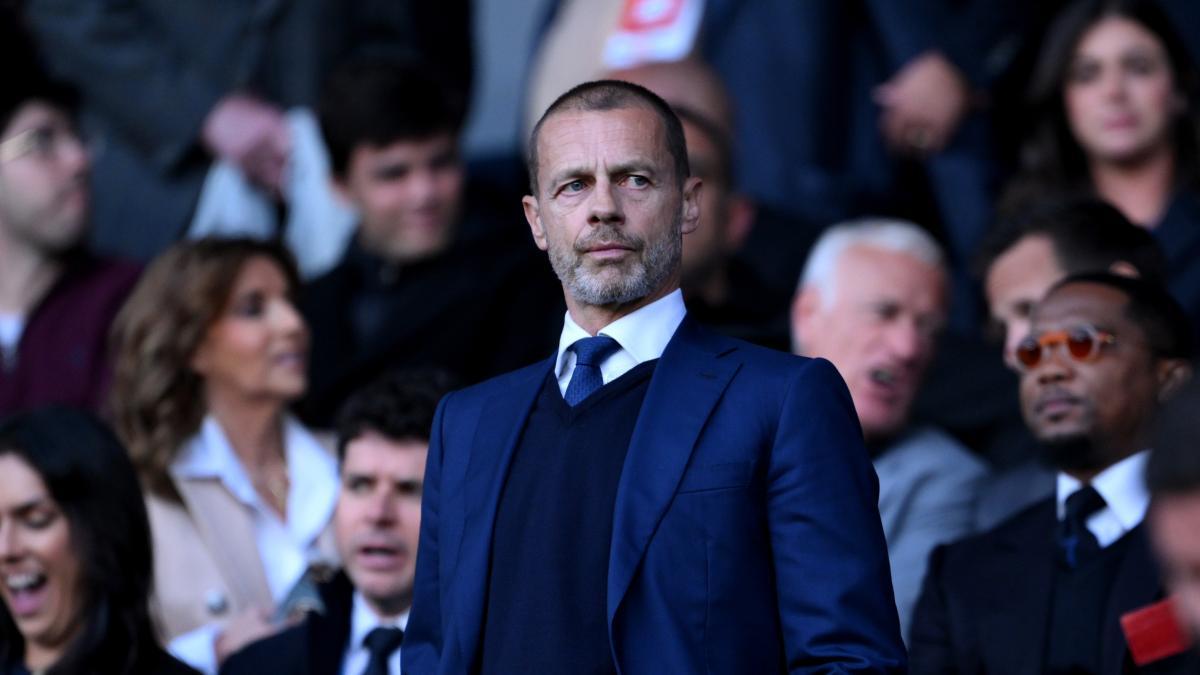
The UEFA has just sent the circular to all federations and clubs that participate in European competitions where they remember the anti-doping rules that are mandatory.
According to them, “players selected for anti-doping control must immediately report to the DCS (doping control room) once they have been notified by the Doping Control Officer (DCO) of the UEFA or by the companion.”
Players are not authorized to return to their locker room and “any breach of this rule may be sanctioned in accordance with the annex UEFA Disciplinary Regulations”.
Evasion, refusal or failure to submit to an anti-doping test may be considered an anti-doping rule violation and. “can lead to the player being suspended for a maximum of four years.”
What to do if the chosen player is injured
If a player suffers an injury before or during the match and the team doctor intends to take him to hospital, “the UEFA anti-doping control officer must first examine him to assess the severity of the injury.” It is up to the player to decide whether he can leave the stadium to go to the hospital immediately or whether he must first undergo a possible anti-doping test. Failure to do so could result in a possible anti-doping rule violation.
Every local team must provide a room with the equipment required by UEFA. They must also ensure “that the Wi-Fi signal is strong enough and that the name and password of the Wi-Fi network are clearly visible, so that the UEFA Anti-Doping Control Officer can use the UEFA digital anti-doping control forms.” For each match, the home team is asked to designate a person who can act as a doping officer in the event that only one UEFA member attends. The designated person may perform other duties such as security, ticket collection, ordering, etc., but must be available for a short training session upon the arrival of the UEFA manager and must remain fully available from the 80th minute of the match until the doping control has been completed. In addition, players who are receiving any treatment must be notified as soon as the UEFA official arrives at the stadium in addition to the corresponding medical certificate that certifies it.
Your position during the match
For each match where UEFA does not have a venue manager or match manager present, the home team is asked to designate a person to act as a doping control liaison officer. Their role is to ensure that the UEFA member and all necessary materials and equipment are available and ready to carry out the doping control. He does not need to have “medical training and can handle other organizational tasks for the match (including those to be carried out by the companion, if he meets the necessary requirements). However, he must be able to speak English and must remain available until the anti-doping control has been completed.” In addition, at each match, two first-class seats must be reserved for UEFA doping officials in the honor box or equivalent. These seats must be located at the end of a row, close to the seat reserved for the UEFA match delegate, and must allow easy access to the anti-doping control room.–
