
March Madness: Duke, Arizona, Michigan and Florida lead NCAA
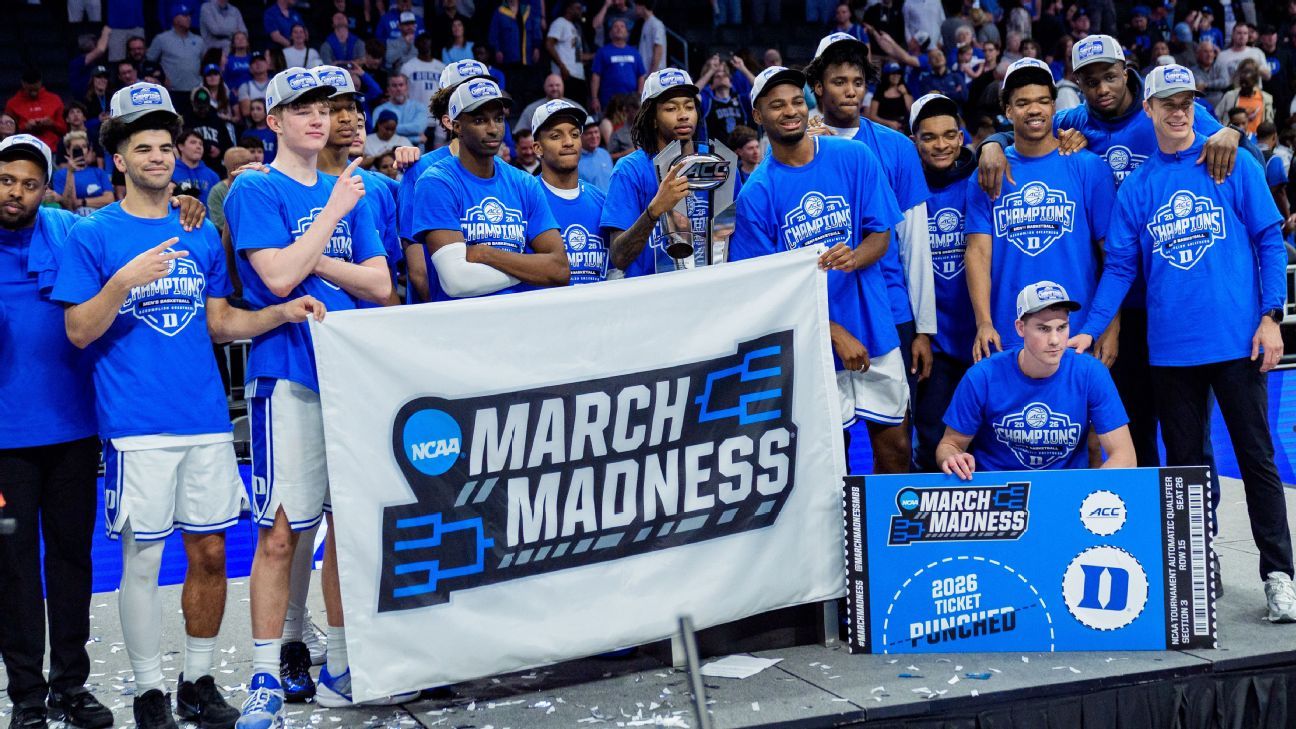
Duke leads the East, Arizona leads the West, Michigan is the top seed in the Midwest and Florida is the No. 1 seed in the South in March Madness.
The Duke Blue Devils are the number one seed in the overall standings of the NCAA men’s tournament of this year; comes to this three-week basketball frenzy, known as the March Madness (March Madness), with a streak of 11 consecutive victories, a record of 32-2 and with Cameron Boozer, the favorite to be named Player of the Year.
The Blue Devilswho lead the Eastern Regionwere accompanied in the group of the four best by the Arizona Wildcats in the Westthe Michigan Wolverines in the Midwest and the current national champion, the Florida Gators, in the South.
According to Keith Gill, chairman of the selection committee of the NCAAthe defeat of Michigan against the Purdue Boilermakers in the Big Ten conference finals—which occurred moments before the tournament brackets were revealed—ultimately caused the Wolverines dropped from second place to third place in the general classification of seeds.
At the most suspenseful moment of the day, the Miami (OH) Redhawks They managed to qualify for the tournament as seed number 11, although just barely. The RedHawks, who boast a 31-1 record but rank 339th in difficulty of their game schedule, were one of the last teams to reach the main draw; Now they will have to play a match of the “First Round of Four” (First Four) this Wednesday against the SMU Mustangs in Dayton, Ohio, a town that is not too far from their headquarters.
Gill noted that the committee had placed the RedHawks above the other teams that make up the “First Round of Four“: NC State Wolfpack, Texas Longhorns and SMU; however, in the overall ranking ranging from 1 to 68, Miami (Ohio) was placed behind these teams. Among the teams that were left out of the tournament were the San Diego State Aztecs, the Indiana Hoosiers, the Oklahoma Sooners and the Auburn Tigers.
According to Gill, injuries also influenced the teams’ classification, and no team was more affected – both in the configuration of the draw and in the performance on the field – than the North Carolina Tar Heels. The Tar Heels are seeded No. 6 after losing star Caleb Wilson to a broken thumb. Likewise, JT Toppin’s season-ending knee injury was a determining factor in the designation of the Texas Tech Red Raiders as seed number 5.
The Eastern Region is full of big names, with the UConn Huskies listed as number 2 seed. Hall of Fame coaches — including Tom Izzo (Michigan State Spartans), Bill Self (Kansas Jayhawks) and Rick Pitino (Big East champion St. John’s Red Storm) — coach the next-ranked teams in the 16-seed regional field.
In the Western region, Arizona will seek to achieve his first Final Four since 2001; However, they will have to overcome a region that has the presence of Purdue – a team that rose from third to second place in the seeding after its victory over Michigan—, the Gonzaga Bulldogs, the Arkansas Razorbacks and the Wisconsin Badgers.
In the Midwest, Michigan —led by Yaxel Lendeborg, Big Ten Conference Player of the Year— aspires to win the first national championship for the Big Ten since Michigan State did so in 2000. The team entered the conference tournament with an average margin of victory of 19.4 points per game; However, in Chicago he was stretched to the limit, winning two games by a total margin of just seven points before losing 80-72 to Purdue in the championship game.
In the Southern region, a possible reissue of the national championship final between the Gators and the Houston Cougars —second seeds—, with the additional incentive that the regional final will be played in Houston’s own hometown. For their part, the Illinois Fighting Illini – third seed – and the Nebraska Cornhuskers – fourth seed – will seek to surprise and frustrate the plans of the favorites.
The Southeastern Conference topped the list of conferences with the highest number of teams qualified for the bracket of 68, contributing a total of 10 representatives; a figure that is four teams below their historical record, established last year. The Big Ten followed with nine teams, while the ACC and Big 12 contributed eight each; a result that is not surprising in the current era of massive conference expansion and image rights compensation (NIL), factors that attract the most talented players to the institutions with the greatest capacity for economic investment.
The Associated Press contributed to this report.
