
Spain, the evolution of “tiki-tiki” that is going for its second crown in the 2026 World Cup
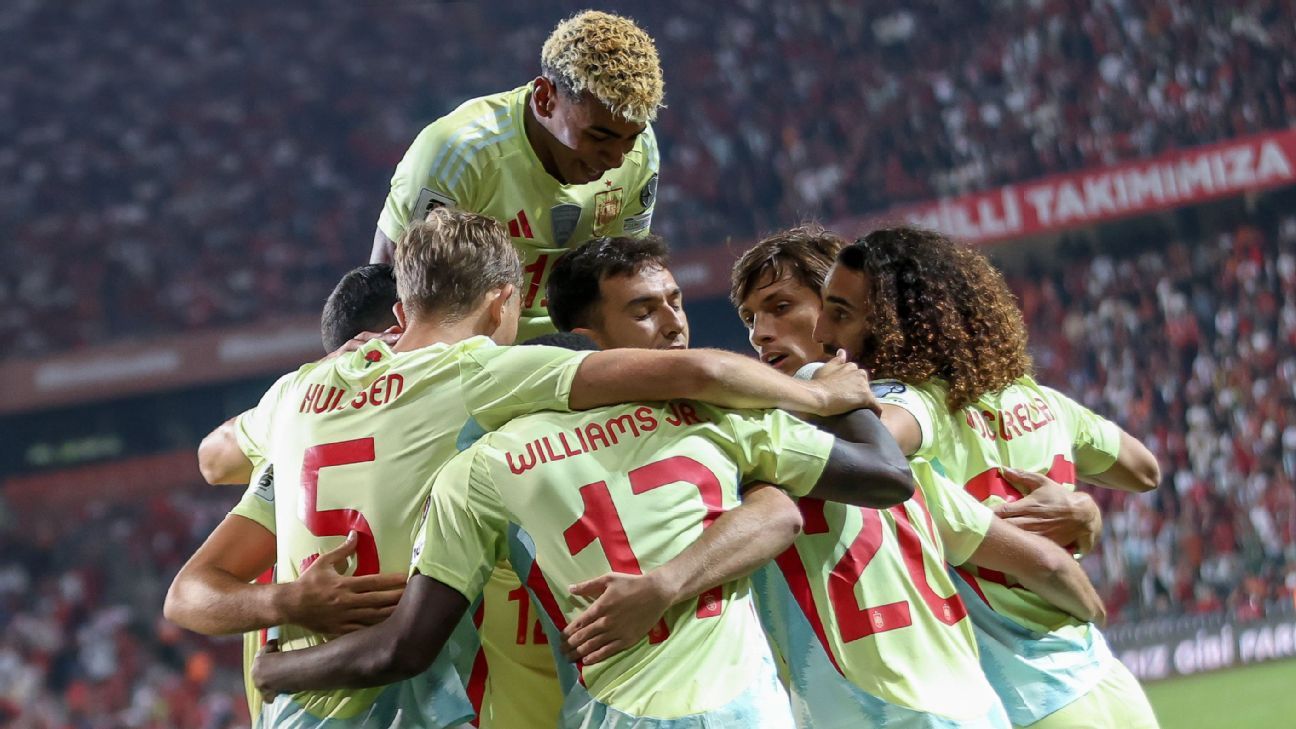
Spain returns to the World Cup scene with a recognizable identity and, at the same time, transformed. The Red Fury It is no longer exactly that endless symphony of passes that dominated the planet between 2008 and 2012, but preserves your DNA: control, technique and collective conviction. The old “tiki-tiki” did not disappear; evolved.
With Luis de la Fuente at the helm, the team found a more dynamic and vertical version without betraying its essence. He classified with authority the World Cup 2026 and arrives with an attractive mix of explosive youth and competitive maturity. The ambition is clear: to win the second star after the historic consecration in 2010.
Spain, from ball monopoly to modern efficiency
The original “tiki-tiki” was a revolution. Based on long possessions, millimeter circulation and immediate pressure after lossturned the ball into a tool of territorial and emotional dominance. That Spain, world champion in 2010 He suffocated with patience, wore out with precision and defended by attacking.
However, football changed. The high pressure, compact blocks and transition speed forced to adjust the model. Today’s Spain maintains the clean exit and the short pass like a spine, but now it accelerates when it detects spaces.
It’s no longer just about having the ball, but knowing when to go deep. The “tiki-tiki” stopped being accumulation and became a strategic tool.
Spain and youth without complexes
The new generation embodies that evolution. Pedri interprets the rhythms naturally: pause when necessary, change of pace when the game demands it. At your side, Rodri provides balance and tactical readingmaintaining order at the base of the midfield.
In attack, the freshness is evident. lamine Yamal and Nico Williams offer overflow, daring and capacity to break closed structures. Apart from these proper names, the team has variants and relays that adapt perfectly to all this. Today’s Spain not only plays: it also accelerates and hits. That combination enhances his candidacy.
Spain: winning mentality and measured speech
De la Fuente has insisted that favoritism guarantees nothinga, but he has also stressed that the group “He never gets tired of winning”. The message combines public prudence with internal ambition. The team knows itself to be competitive and does not shy away from the challenge of fighting for the title.
The solid classification and recent consistency reinforce that confidence. Spain arrives at the World Cup with a positive streak, locker room cohesion and a clear idea. It does not depend on an exclusive figure, but on a collective mechanism where each piece understands its function.n.
World Cup 2026: Can Spain repeat history?
The comparison with 2010 is inevitable. That generation conquered the world through patience; This one wants to do it from tactical intelligence. The goal is the same: lift the second World Cup and consolidate an identity that has marked an era.
The “tiki-tiki” is no longer a rigid dogma, but a flexible basisand. Spain learned that evolution is survival. And in 2026, this renewed version will seek to turn inheritance into legacy.
